
Last updated October 15, 2026
 Whole-home duct cleaning
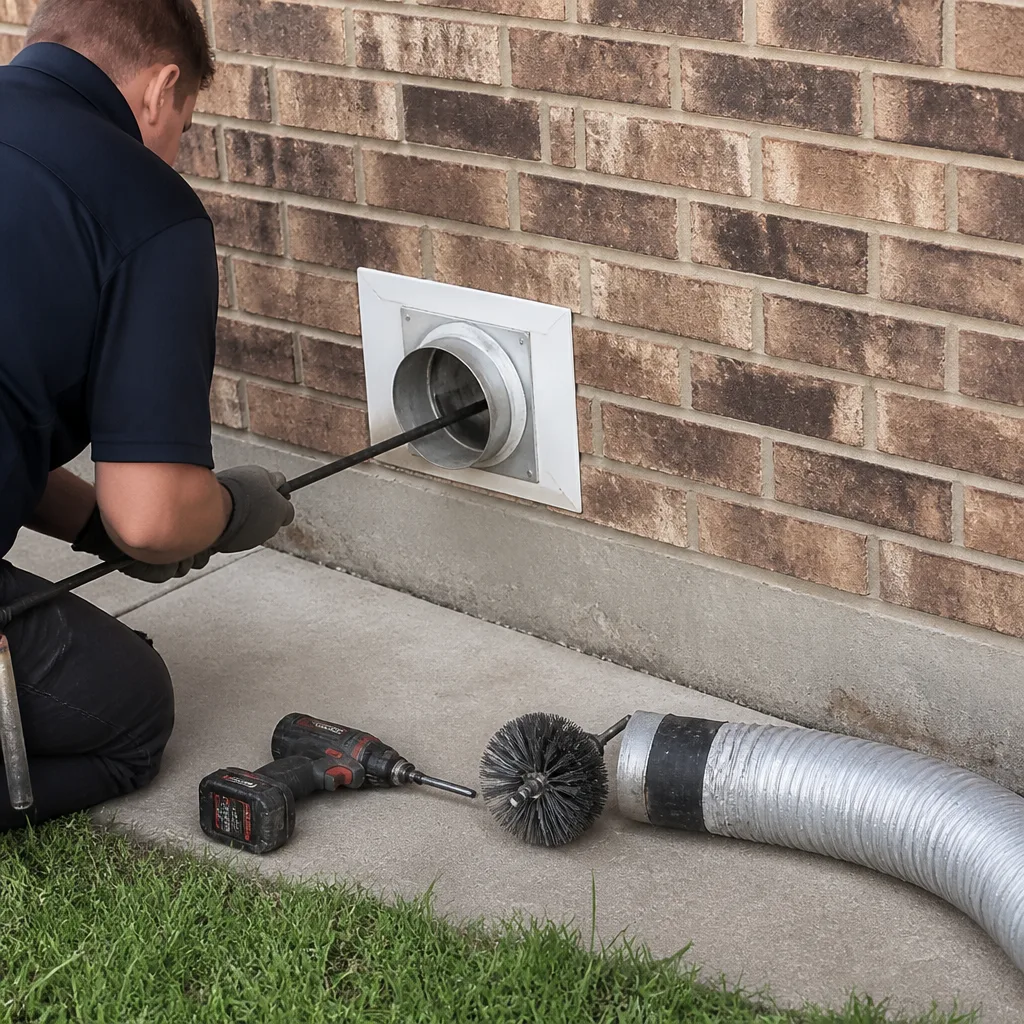
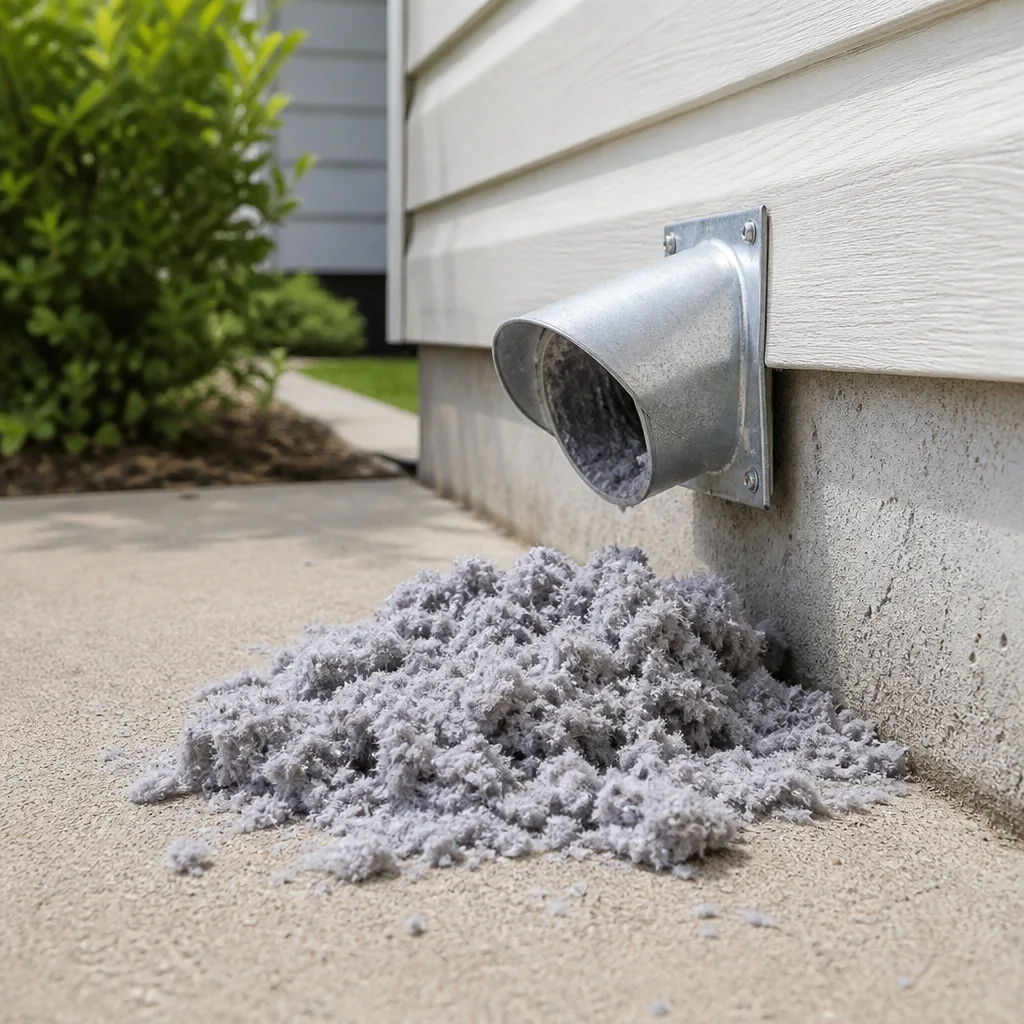 Dryer vent cleaning
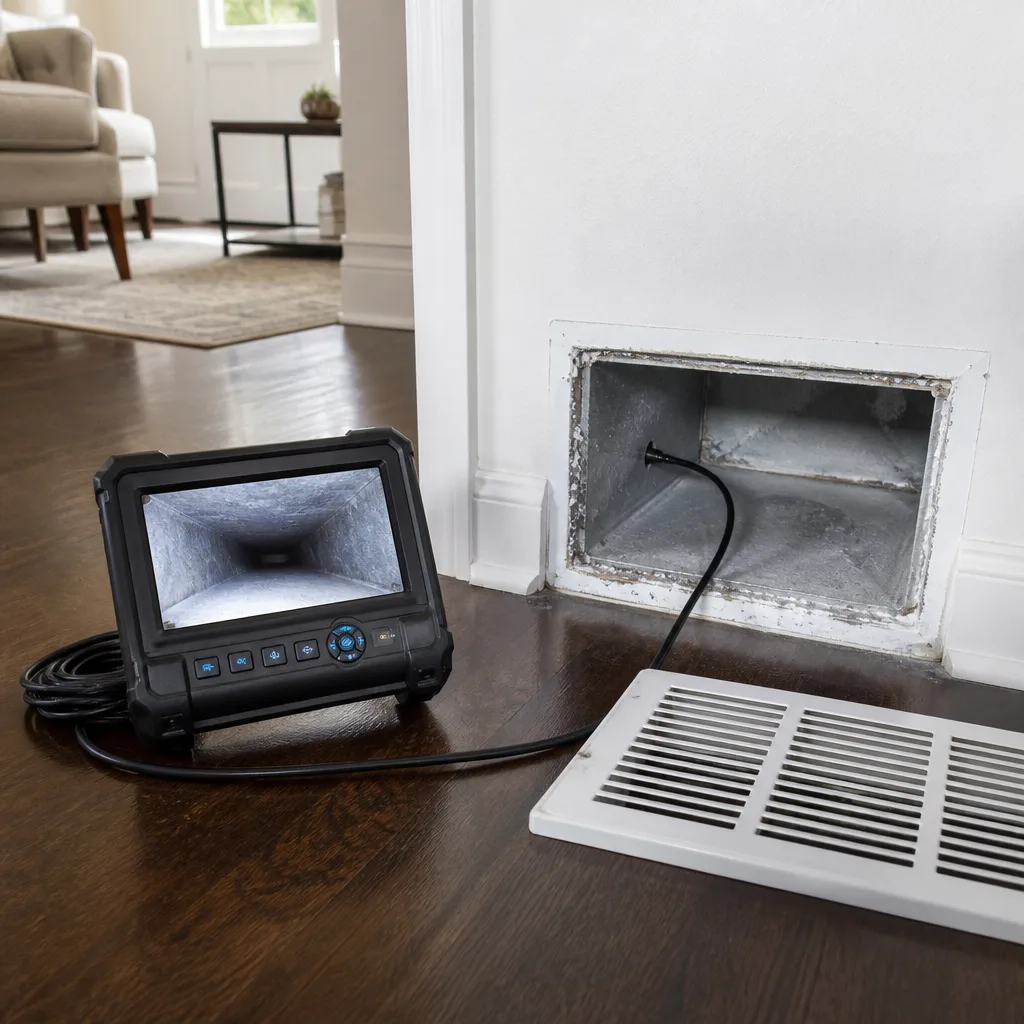 Camera inspection
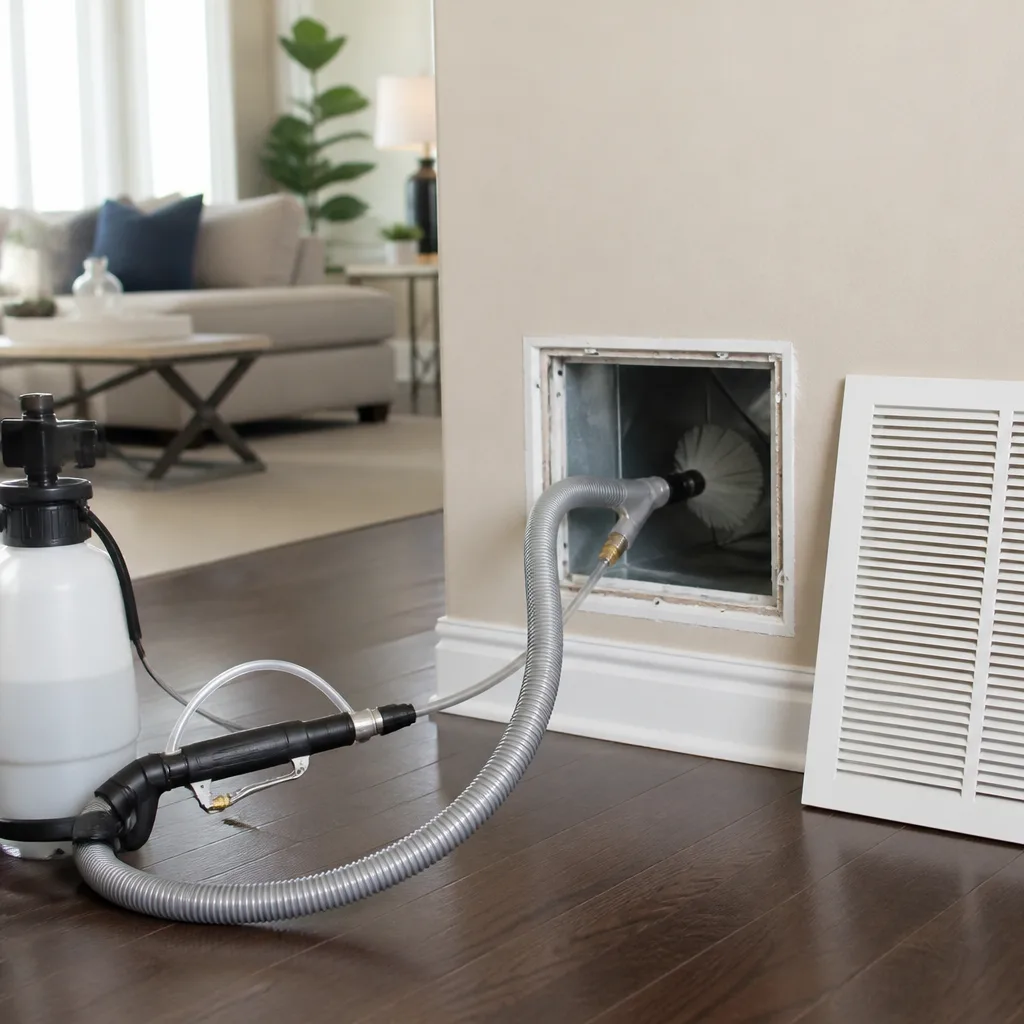 Sanitizing & deodorizing
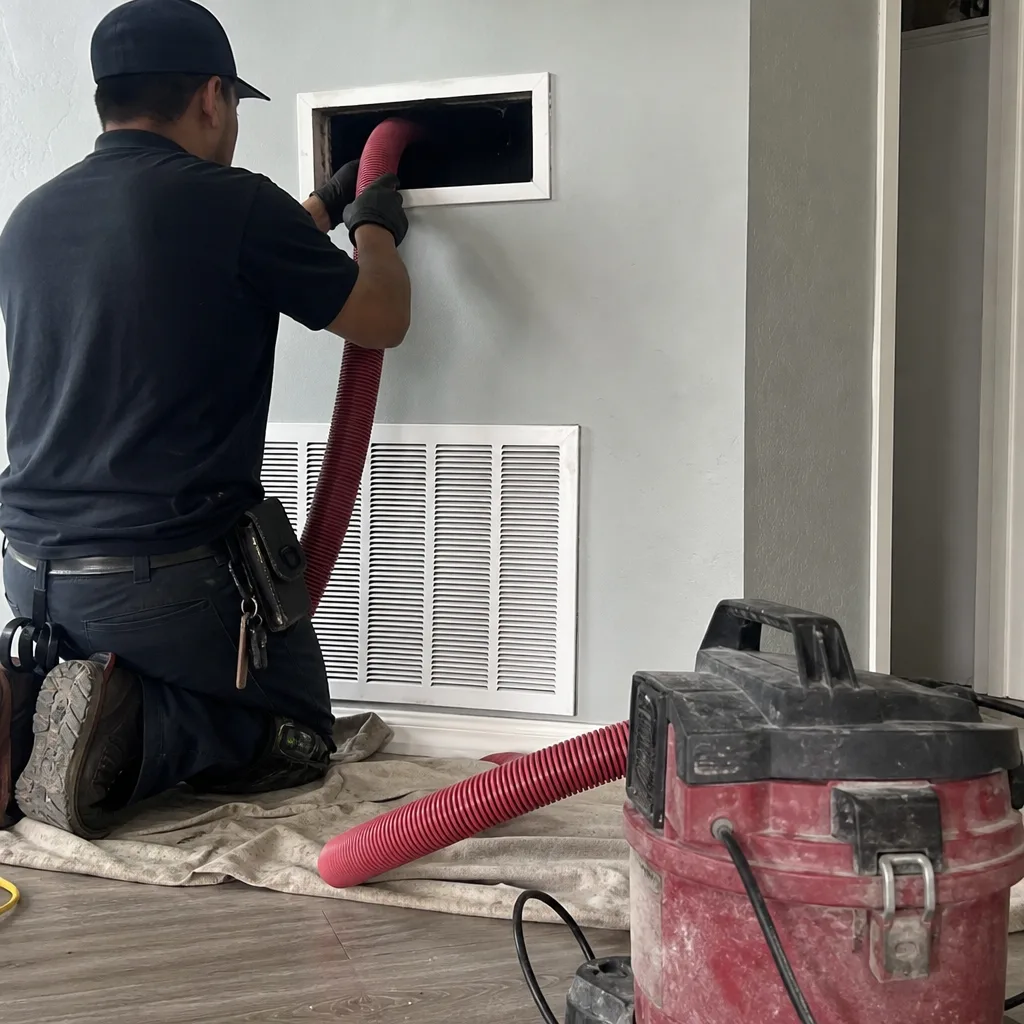
Whole-system duct and dryer vent check with before-and-after photos - you see exactly what came out of your vents
That "$99 whole-house special" is a bait ad - the real number appears once they are in your hallway, or the "clean" is a shop-vac at the register. We photograph the inside of your ducts before and after instead.
Air Duct Cleaning Maintenance Checklist for Fort Worth Homeowners
Most air duct maintenance checklists are written for a climate-neutral house that doesn’t exist. They don’t mention that Fort Worth’s cedar fever season, which runs December through February, can pack more allergen material into return vents in eight weeks than the rest of the year combined. This guide is different. It’s a room-by-room, month-by-month reference built specifically for Fort Worth homes, accounting for our clay-heavy soil, our 140°F summer attics, and the maintenance windows between HVAC service calls when duct checks actually make sense. By the time you finish reading, you’ll have a working system you can hand to any technician, including the team at Mortons Air Duct Fort Worth home, and get a faster, more accurate assessment on the spot.
Styles & brands we work with
Quick Answer
Fort Worth homeowners should inspect visible duct components every 90 days, change HVAC filters every 30 to 60 days depending on pets and cedar season, schedule professional air duct cleaning in Fort Worth every 3 to 5 years, and log every filter change and inspection in one notebook or app. Homes with one or more shedding dogs should cut that professional window roughly in half. The five signs that move a professional cleaning from “someday” to “this month” are: visible dust puffing from registers when the system kicks on, gray-black buildup around return vent louvers, a musty smell that gets stronger when the AC runs, waking up congested every morning during cedar season, and a utility bill that’s climbing without a matching change in usage.
Table of Contents
- The Month-by-Month Fort Worth Maintenance Calendar
- What You Can Safely Inspect Yourself (and What You Can’t)
- The One-Page Maintenance Log That Saves You Money
- The 5 Signs That Move Cleaning from Someday to This Month
- How Pets Change the Maintenance Interval Math
- Cedar Season and Your Return Vents: Why December Through February Matters
- Attic Heat and Flex Duct Degradation: The Fort Worth Summer Problem
- Common Mistakes to Avoid
- When to Call a Professional
- Frequently Asked Questions
- The Bottom Line
The Month-by-Month Fort Worth Maintenance Calendar
Here’s the thing about duct maintenance in Fort Worth: our calendar doesn’t match the generic “spring and fall” rhythm that national guides recommend. Our biggest allergen season is winter. Our dust season is spring. Our duct-degradation season is summer. Here’s what we’ve seen work for hundreds of local homes, organized by the actual conditions outside your windows, not by a marketing calendar.
December through February: Cedar Fever Season
Mountain cedar pollen peaks between late December and mid-February. In Fort Worth, this is the single biggest return-vent loading event of the year. The pollen is microscopic, sticky, and fine enough to pass through a standard fiberglass filter. What we see in homes across Fort Worth during these months: return vent louvers that look gray-white after just four weeks, even in homes that changed filters in November.
What to do in this window:
- Run your HVAC fan on “On” instead of “Auto” during the worst stretches. This keeps air moving through the filter continuously, capturing more pollen before it settles in the duct runs.
- Check return vent louvers every two weeks. If you see a gray-white film forming, wipe it with a damp cloth. That’s pollen you’re keeping out of the return path.
- Change your filter at the 30-day mark even if the packaging says 90 days. Cedar pollen shortens filter life significantly in North Texas.
- If anyone in the house wakes up congested every morning during cedar season but feels better after being outside for an hour, that’s a sign the bedroom duct runs are holding allergen material, not just the filter.
March through May: Storm Dust and Construction Debris
Spring in Fort Worth brings the wind. March and April gusts kick up clay-dust from construction sites, open fields, and the dry riverbeds around the Trinity. This dust is heavier than cedar pollen, which means it settles differently. It drops into supply runs and sits there, especially in homes near new development. We’ve seen duct systems in Arlington Heights and the Near Southside that looked clean in February show a measurable dust layer by late April just from windborne clay.
What to do in this window:
- Inspect the exterior intake grilles. On many Fort Worth homes, the exterior intake sits low on the wall or near a flower bed. Check for leaf debris, mulch dust, and construction silt buildup.
- Vacuum the interior registers and the visible duct opening behind them with a brush attachment. This takes ten minutes and removes the surface material before it gets pulled deeper.
- If you had roof work or fence work done, check the register boots in the rooms nearest the work. Power drilling and sawing create fine dust that finds its way into floor-level return paths.
- Schedule your annual HVAC spring tune-up. Ask the tech to note duct condition in the service record. That note becomes a data point for your maintenance log.
June through September: Peak-Load Attic Heat
This is the season most checklists ignore, and it’s the one that actually damages your ducting. A Fort Worth attic in August can sit above 140°F for hours every afternoon. The flex duct liner, that plastic inner sleeve that keeps conditioned air from leaking into the attic, ages faster in sustained heat. We’ve pulled liners out of 8-year-old systems in Fort Worth that looked like they’d been in service for 20 years because the attic ventilation was poor.
What to do in this window:
- Pay attention to cooling performance room by room. If the bedroom over the garage or the west-facing living room suddenly can’t hold temperature while the rest of the house is fine, that’s a duct problem, not an HVAC unit problem.
- Check the duct connections visible in the attic. With the system running, feel for air leakage around the takeoff collars and flex connections. A warm spot on the duct insulation means air is moving somewhere it shouldn’t.
- Watch your kilowatt usage. A 15 to 20 percent jump on the July bill versus July last year, with the same thermostat settings, often means the system is moving conditioned air into the attic, not the rooms.
- If you hear a soft whistling from a register that wasn’t there before, note it in your log. That’s a pressure change, and pressure changes in peak summer usually mean a compromised run.
October and November: Leaf Litter and Intake Debris
Fall leaves in Fort Worth are a bigger issue for dryer vent cleaning in Fort Worth than for ducting, but they still matter. The fall in Fort Worth also tends to be when first-floor exterior intakes collect leaves, acorns, and the occasional wasp nest. The ducts themselves don’t care about fall leaves, but the exterior intake and the return path leading to it absolutely do.
What to do in this window:
- Clear debris from around the exterior intake. Pull leaves and acorns away from the grille. If the grille is clogged, the system has to work harder to pull return air, and that changes dust collection patterns in the return runs.
- If your dryer vent cap sits near a tree, check it during October. Built-up lint plus leaf debris is how exterior dryer fires start. Morton’s dryer vent cleaning service in Fort Worth includes an exterior cap inspection, which catches this before it becomes a problem.
- Change the filter in early November with a fresh one, then again in mid-December before cedar season peaks. Yes, that’s a six-week change. Yes, it matters.
What You Can Safely Inspect Yourself (and What You Can’t)
Here’s the honest division of labor. There are exactly four things a Fort Worth homeowner can meaningfully inspect and maintain without specialized equipment, and there’s a hard stopping point past which you need a technician with a camera and the right tools. Knowing where that line is saves you time and prevents you from doing something that makes the problem worse.
Safe and useful for homeowners:
- Register and grille faces: The visible metal face of every supply and return register. Look for dust buildup, discoloration, pet hair accumulation, and mold. All of these are visible with a flashlight. Remove the register face and inspect the visible duct opening behind it, not deeper than your flashlight beam reaches.
- Exterior dryer vent cap: Walk outside to where the dryer vents, check the flap movement, the lint buildup on the cap, and any nesting debris. This is a two-minute check you can do monthly.
- Visible flex connections in the attic or crawl space: If your attic has open access and you can safely stand on the joists, look at the flex duct sections you can see. Check connections for obvious separation, sagging runs, or crushed sections. This is a visual inspection only. Do not climb onto weak attic surfaces.
- Filter replacement and filter slot: The slot itself collects debris, and a clean filter going into a dirty slot doesn’t seal.
What requires a professional with a camera:
- Interior duct surface inspection: You cannot see the interior walls of a duct run from a register. The dust, debris, and potential mold you see at the register mouth tells you very little about what’s 15 feet deeper. That’s a camera inspection.
- Flex duct interior liner condition: Attic heat in Fort Worth deteriorates the plastic liner from the inside. It looks fine from the attic. It shows up on camera as cracking, peeling, or missing sections.
- Plenum and coil box condition: The plenum sits between the unit and the duct runs. If it’s rusting, leaking, or holding water from a condensation problem, the ducts will never stay clean no matter what you do at the register level.
- Any situation where you see black, dark green, or gray fuzzy growth: Don’t touch it, don’t spray it, don’t scrape it. Call a professional. Seriously. The last thing you want to do is disturb the spores and spread them through the supply side.
The One-Page Maintenance Log That Saves You Money
Most Fort Worth homeowners cannot tell you when their filter was last changed. Some can, but they can’t tell you when the previous one before that was changed. Almost none can tell you what the register faces looked like during last year’s cedar season. This is the information gap that costs you money, and it’s the easiest one to close.
Here’s what your duct maintenance log needs. Keep it in a spiral notebook, a Notes app, or a printed sheet taped to the side of the air handler. What matters is that it’s in one place and used every time.
- Filter change dates: Every single one. Date, filter brand and MERV rating, and the condition of the old filter when it came out. “Visibly gray after 45 days” is a useful data point. A blank space is not.
- Inspection notes by room: One line per month: “Master bedroom register: clean.” “Hallway return: light dust film wiped.” “Kids’ bathroom register: pet hair stuck to grille, vacuumed.” Over time, this tells you which rooms load dust faster. The master bedroom with two dogs loads faster. That’s not a mystery, but seeing it in writing changes when you schedule a cleaning.
- Past cleaning records: Date of service, what was done, whether a camera inspection was performed, and any notes the technician left. If a tech noted “moderate dust accumulation in the return trunk” three years ago, and you’ve added a dog since then, that note is gold for whoever comes next.
- Anything unusual observed during monthly walkthroughs: Whistling registers, rooms that won’t hold temperature, musty smell on startup. The log turns “I feel like this has been getting worse” into “Here’s the note from June and here’s the note from July and that’s the pattern.”
This log costs you five minutes a month. It saves you real money when you hire a duct cleaner in Fort Worth, because a technician who can see the baseline knows what to look for, and can give you a faster, more accurate assessment without spending an hour guessing at your system’s history. We run camera inspections on our calls, and the difference between a home with records and a home without them is meaningful. With records, we can say “This accumulated in the last 14 months.” Without them, we can only say “This accumulated at some point.”
The 5 Signs That Move Cleaning from Someday to This Month
Some duct systems can wait. Others shouldn’t. Here are the five signs from a DIY walkthrough that mean a professional cleaning has moved from “eventually” to “schedule it this month.” We see these constantly in Fort Worth homes, and they’re all observable without any special equipment.
- Dust puffing from a supply register when the system kicks on: Watch the register in a dark room with a flashlight at start-up. If you see fine particles ejecting like a tiny chimney puff when the blower starts, you’re watching accumulated material get airborne in your living space. This isn’t subtle and it isn’t normal.
- Gray-black buildup around the return vent louvers: Every return vent gets dusty eventually. But when the buildup looks like a shadow around the edges of the louver even after you wipe it clean, and it returns in under a month, the return run itself is loaded and pulling that material back across the grille face.
- A musty smell that gets stronger when the AC runs: Duct systems in Fort Worth attics can develop condensation issues. When a musty, damp smell kicks in with the blower, that’s not an HVAC unit smell. It’s the duct interior. The smell is being delivered to you from inside the runs.
- Waking up congested every morning specifically during cedar season: If the pattern matches the calendar, meaning it starts in late December and fades in March, and it’s worse in bedrooms than in the living room, the return runs are holding cedar pollen and releasing it into the sleeping zones all night. This is one of the most common patterns we see in Fort Worth.
- A utility bill climbing with no matching change in usage: A 15 to 20 percent increase versus the same month last year, with the same thermostat habits and the same rates. A duct leak or heavily loaded return path makes the whole system work harder. The bill is the report card.
If you hit two or more of these, call. The cost of a professional cleaning is materially less than running a strained system through another Fort Worth summer.
How Pets Change the Maintenance Interval Math
Here’s the pet math, and it’s not subtle. A single shedding Golden Retriever in an 1,800 square foot Fort Worth home can produce enough hair and dander in eight weeks to load a return run more heavily than a pet-free home accumulates in eighteen months. Two cats plus a dog, which is a very common Fort Worth household, and you’re looking at a recommended professional cleaning window around half of what the generic three-to-five-year national guideline suggests.
Why so dramatic? Because pet hair doesn’t float. It drops. It lands on the floor, gets kicked up by foot traffic, pulled into floor-level returns, and then the static charge on the duct walls holds it there. Once pet hair is in a return run, it acts like a catch net for every other particle that passes through: dust, pollen, dander, lint. The return run becomes progressively more loaded, and the system’s efficiency drops.
What we see in Fort Worth homes with pets:
- Homes with one small, low-shedding dog: Professional cleaning every 4 to 5 years. Normal filter changes at 30 to 45 days. Log-based inspection notes become more valuable here because the margin is wider.
- Homes with one large shedding dog: Professional cleaning every 2 to 3 years. Filters at 30 days like clockwork. Monthly register vacuuming becomes non-negotiable.
- Homes with multiple pets, especially any long-hair breeds: Professional cleaning every 18 to 24 months. Filters at 30 days or sooner if visibly gray. Plus, consider higher-MERV filters if your system can handle the pressure drop. This is a conversation to have with an HVAC tech, but it can meaningfully reduce the volume of pet material entering the return path.
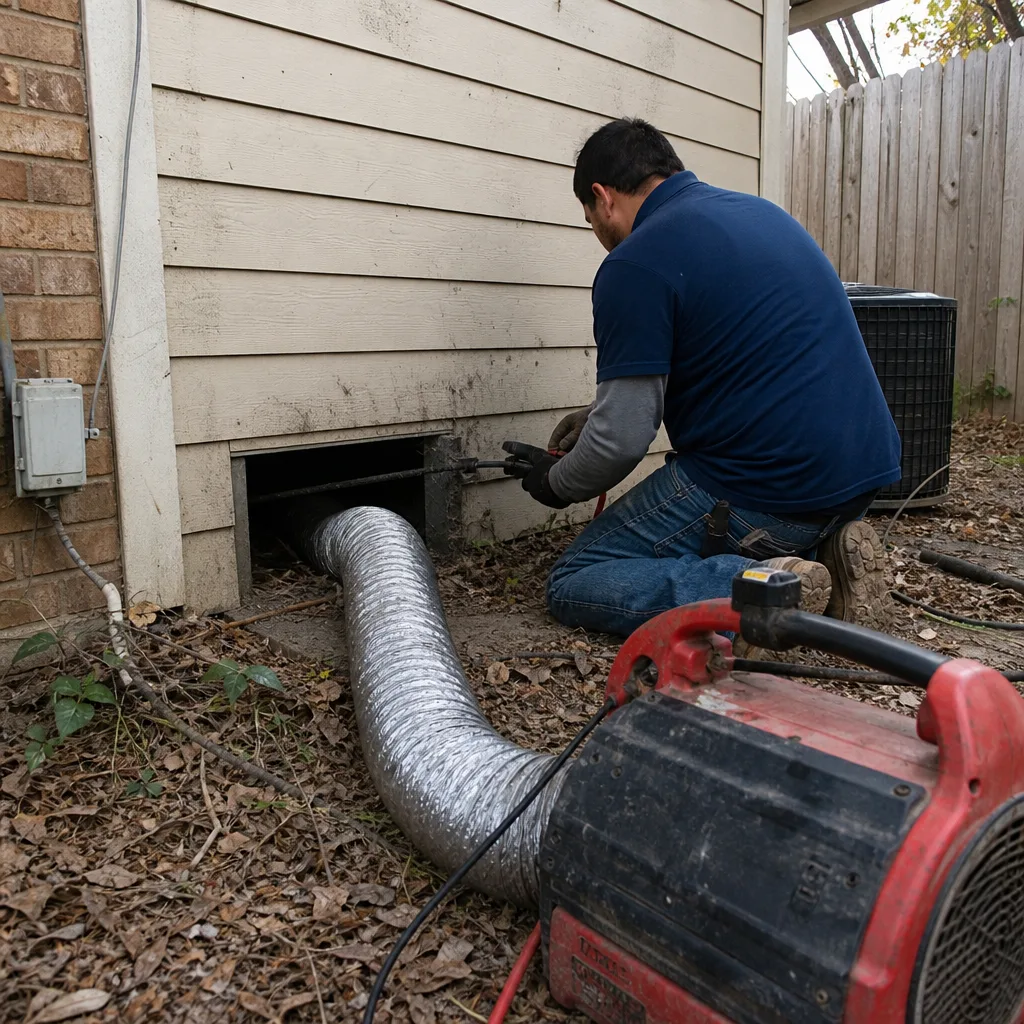
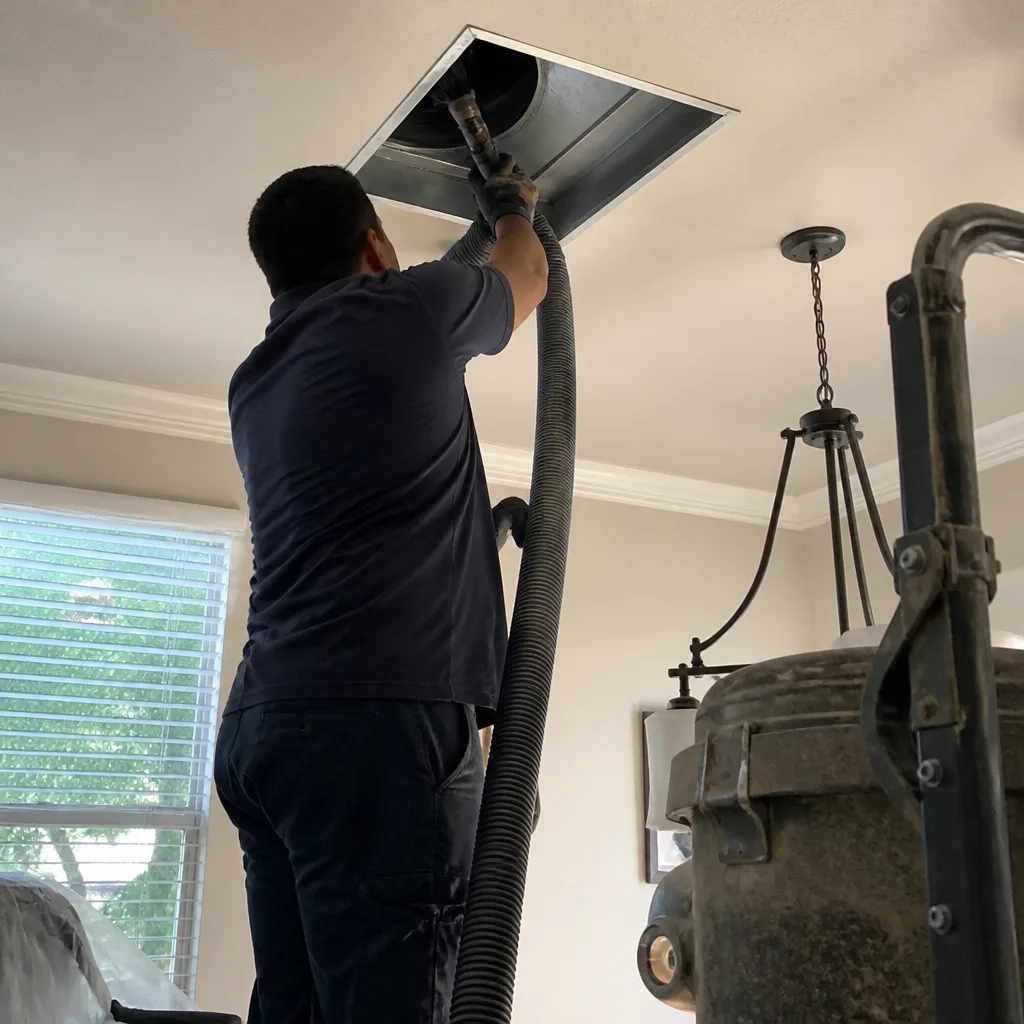
If you fall into that last category and you’re not sure when your ducts were last cleaned, it’s probably time. Morton’s air duct cleaning service in Fort Worth uses HEPA-filtered negative air machines so the debris we pull out of the runs doesn’t end up in your living room, which matters even more in pet households where the load itself is heavier.
Cedar Season and Your Return Vents: Why December Through February Matters
Mountain cedar, which is actually a type of juniper, pollinates from early December through late February across North and Central Texas. Fort Worth sits directly in the worst of it, with pollen counts that routinely spike into the thousands of grains per cubic meter, high enough to trigger symptoms in people who don’t even have a diagnosed cedar allergy.
Here’s what most Fort Worth homeowners don’t realize: your HVAC system is a pollen concentrating machine. During cedar season, the return vents pull air from inside your house, which includes whatever pollen came in on coats, shoes, and dog fur. That air runs through the filter, which catches some percentage, then through the return ducts, the coil, the blower, and back through the supply side. The pollen that gets past the filter settles in the return runs, where it sits until the next time the blower cycles. Pollen that lands in a supply run gets a fresh ride on the next cycle, which is why your bedroom can feel like a cedar chamber even with the windows sealed.
What we see in Fort Worth during cedar season specifically:
- Return vent louvers turn gray-white within four to six weeks, even with regular filter changes.
- Homes with standard fiberglass filters capture far less cedar pollen than homeowners assume. The standard blue fiberglass filter is a rock catcher. Cedar pollen is smaller than that.
- Bedrooms furthest from the return register, usually the second-story bedrooms in two-story homes, get less return airflow and therefore concentrate more suspended pollen in the air.
- The single most effective habit we’ve seen: run the fan on “On” during the peaks. It costs very little, and it keeps air moving through the filter and the return paths continuously rather than letting pollen settle during off cycles.
- Rooms over the garage never cool well: The garage is unconditioned, the attic above it is hot, and the duct run to that room is often longer than any other. Long flex runs in hot attics lose more air than short ones.
- West-facing rooms lose cooling in late afternoon: The attic temperature peaks at 4 to 5 p.m. If your west-facing bedroom starts struggling at exactly that time, attic heat is a likely contributing factor.
- Homes with radiant barrier or sprayed foam attics fare better: If the previous owner or builder addressed attic heat, the flex runs live in a slightly less brutal environment, and liner degradation slows. If your attic is conventional fiberglass batt over the ceiling with no radiant barrier, your ducts are cooking.
- Using the wrong filter and thinking you’re protected. The standard blue fiberglass filter catches large debris and almost nothing else. If you’re using one in a Fort Worth home during cedar season, you’re essentially not filtering. A MERV 8 pleated filter is a meaningful step up without restricting airflow in most residential systems.
- Changing the filter on a schedule instead of by condition. A 90-day filter in a two-dog Fort Worth home might be fully loaded at 45 days. The printed interval is a guideline for a pet-free, low-dust home. Look at the filter. If it’s gray and clogged, it’s done regardless of the calendar.
- Wiping registers and thinking you’ve addressed the ductwork. The register face is where dust lands last. The duct run behind it is where dust lives. A clean register on a loaded duct is like washing the windshield on a car that’s leaking oil.
- Ignoring the exterior dryer vent cap. Fort Worth’s fall leaves plus lint produce a real clogging pattern. The cap is visible from the outside. Check it monthly. It’s the easiest safety inspection on the property.
- Paying for a cheap duct clean and then never verifying the work happened. This industry has a real bait-and-switch problem. A low teaser price is applied to a single return, and before you know it, the invoice is four times the quote. At Morton’s, the price is written before any work starts. You know the total for the whole system before the van door opens. If the company won’t do that, call someone else.
- Waiting until you smell something or someone gets sick. By the time a duct problem produces a smell you can notice without paying attention, the buildup is significant. The point of the 90-day and monthly checks in this guide is to catch the visible, trackable signals before the subtle ones become obvious ones.
- Checking everything yourself and then not keeping notes. The log matters more than any single inspection. A year of consistent notes tells a story that no single glance can. Without records, every inspection is starting from zero.
Cedar season is the best time to do a baseline assessment. If you’re seeing significant pollen loading at the register level in January, schedule a camera inspection. Many Fort Worth homes do not need an annual duct cleaning, but if the return runs loaded up with cedar pollen year after year, that material accumulates faster than you’d think. It’s one of the patterns we see most often during air duct cleaning in Fort Worth service calls in March and April, when homeowners finally call after a miserable season.
Attic Heat and Flex Duct Degradation: The Fort Worth Summer Problem
If you live in a newer Fort Worth home, your ductwork is most likely flex duct. Flexible plastic liner wrapped in fiberglass insulation. It’s inexpensive, it’s easy to install, and it’s ubiquitous. It’s also susceptible to something most maintenance guides completely ignore: sustained attic heat.
A Fort Worth attic in August can hit 140°F or higher during the afternoon. That heat affects the plastic inner liner of flex duct. Over time, the liner can become brittle, crack, and peel. When it does, the conditioned air you paid to cool never reaches the room. It leaks into the attic insulation, and you get warmer rooms and higher bills. This process happens slowly and invisibly from the outside. The flex duct that looks fine from the attic walkway may be failing from the inside.
The attic heat problem shows up in a few predictable ways:
What you can do from the living space: track the room temperatures. If one room consistently runs 4 to 6 degrees warmer than the thermostat in peak summer and the bill keeps climbing, that’s enough data to justify an attic inspection. What you should not do: feel around in the attic yourself during an August afternoon. The attic space is dangerously hot, and the risk of a fall or heat illness is real. This is a job for a technician with the right footwear, a headlamp, and a camera. Morton’s crews work in Fort Worth attics year-round, and we’ve learned to schedule inspections for morning hours during the summer. The attic holds 140°F until well after dark in July and August.
Common Mistakes to Avoid
When to Call a Professional
Call when you hit two or more of the five signs above and you can’t explain them away. Call if you’ve lived in the home for five years and never had the ducts inspected and you have pets. Call if the cedar season pattern, morning congestion that improves when you leave the house, matches the calendar. Call if the attic is conventional and the west rooms won’t hold temperature in August. Call if you’re selling or buying and the previous owner left no maintenance records. And call if you tried a cheap cleaning once and have no idea whether anything actually happened. Mortons Air Duct Fort Worth offers free estimates in Fort Worth, with a written price before any work starts and a camera inspection so you can see the interior of your ducts before and after. Call (682) 432-0424.
Frequently Asked Questions
Every 3 to 5 years for a typical Fort Worth home without pets, and every 18 to 30 months for homes with one or more shedding dogs or cats. Fort Worth’s cedar season and summer attic heat both accelerate duct loading and liner degradation compared to the national average, which pushes many local homes toward the shorter end of those ranges. Call (682) 432-0424 for an exact quote based on your home, your pets, and your maintenance history.
The five signs that shouldn’t wait are: dust puffing from supply registers on startup, gray-black buildup around return vent louvers that returns within a month of cleaning, a musty smell that strengthens when the AC runs, morning congestion during cedar season that fades when you leave, and a utility bill that’s up 15 to 20 percent without a usage change. Any two of these mean it’s time to schedule an inspection.
You can clean the register faces, the visible duct mouth behind the register, and the exterior dryer vent cap. You cannot clean the interior surface of duct runs, the plenum, or the coil box without professional equipment, and attempting it with a shop vac pushes debris deeper instead of removing it. Proper cleaning requires a camera inspection, agitation tools, and HEPA-filtered negative air pressure so the debris leaves the house instead of recirculating.
Generally no. Standard Texas homeowners policies do not cover routine duct cleaning, and most do not cover duct contamination unless it results from a covered peril like a fire or a major water event. Some policies may cover duct cleaning after a covered loss. Check your policy language or ask your agent directly before scheduling.
Whole-system air duct cleaning in Fort Worth typically costs between $350 and $700 for an average single-family home, depending on the number of systems, the number of returns, the accessibility of the ductwork, and whether dryer vent cleaning is included. Homes with two AC systems or extensive flex runs cost more than a small single-story ranch. The price you get should be for the whole system, written down, before work starts. If a company prices it per vent and won’t give you a total number, walk away.
Because the cheap quote is usually a partial service. A company agrees to clean “the vents” for $99, then the technician arrives and discovers that the return trunk, the plenum, and the coil all need additional work, and the final bill lands at $500 or more. It’s the most common complaint we hear from Fort Worth homeowners switching to Morton’s. Our price is for the full system, written before any work begins, and it doesn’t change. If a quote seems too good to be true, the invoice that follows it usually isn’t.
A proper whole-system cleaning takes 3 to 5 hours for an average Fort Worth single-family home. The process includes camera inspection before and after, agitation of all supply and return runs, the plenum and coil box, and negative air filtration during the entire process. Faster is not better. A crew that promises a full cleaning in under two hours is skipping something.
The Bottom Line
Duct maintenance in Fort Worth isn’t a seasonal afterthought. It’s a monthly five-minute habit and a professional visit every few years, timed to the actual conditions of North Texas: cedar pollen in winter, windborne dust in spring, attic heat in summer, and leaf debris in fall. The checklist works when you use it consistently, log what you see, and call a professional when the specific signs line up. Keep the filter fresh during cedar season. Check the registers monthly. Watch the west rooms in August. And if you hit two of the five warning signs, schedule an inspection. You can call Morton’s Air Duct Fort Worth at (682) 432-0424 for a free estimate with a written price before any work starts. The team knows Fort Worth attics, Fort Worth pollen, and Fort Worth pets, and the 365-Day Done Right Promise means if it’s not done right, we make it right.
Written by Paul Adeyemi, Owner at Mortons Air Duct Fort Worth, serving Fort Worth since 2005.
See the difference
 Before
 After
After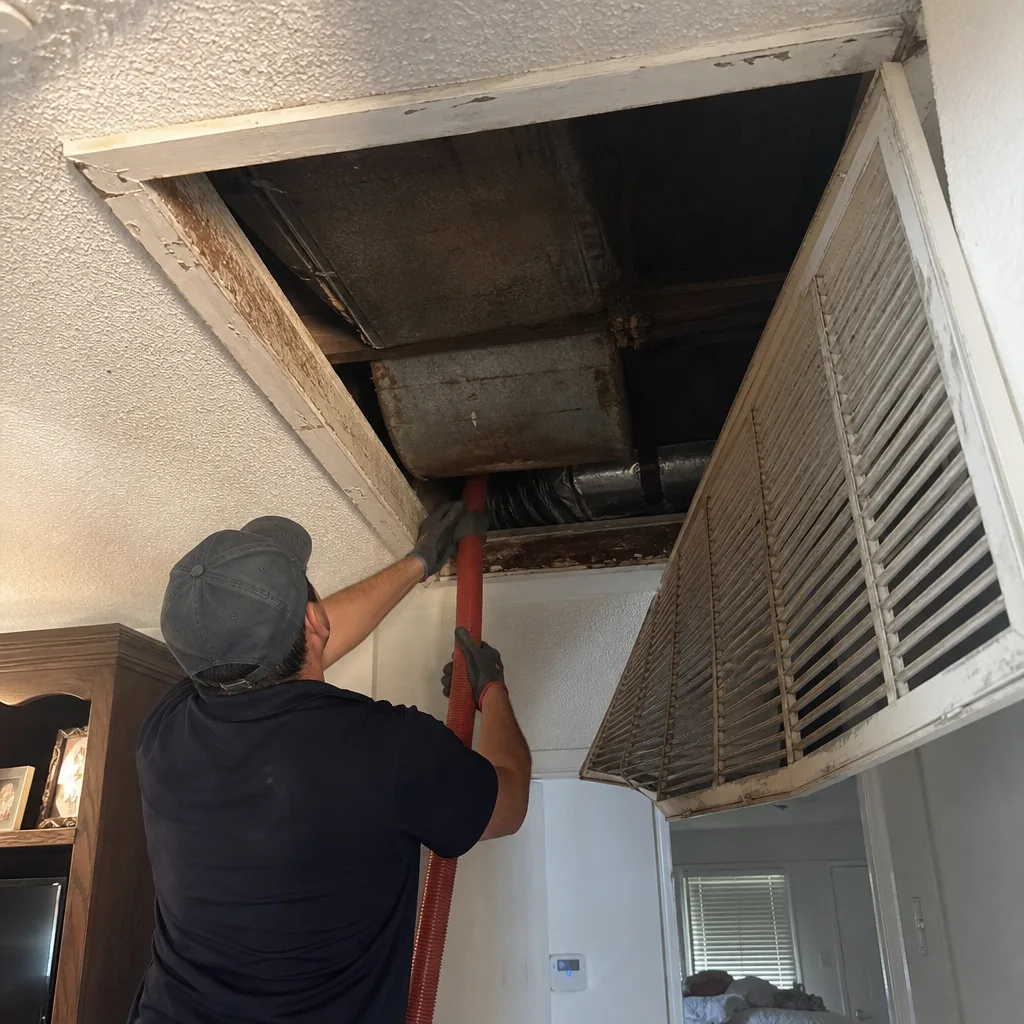 Before
 After
After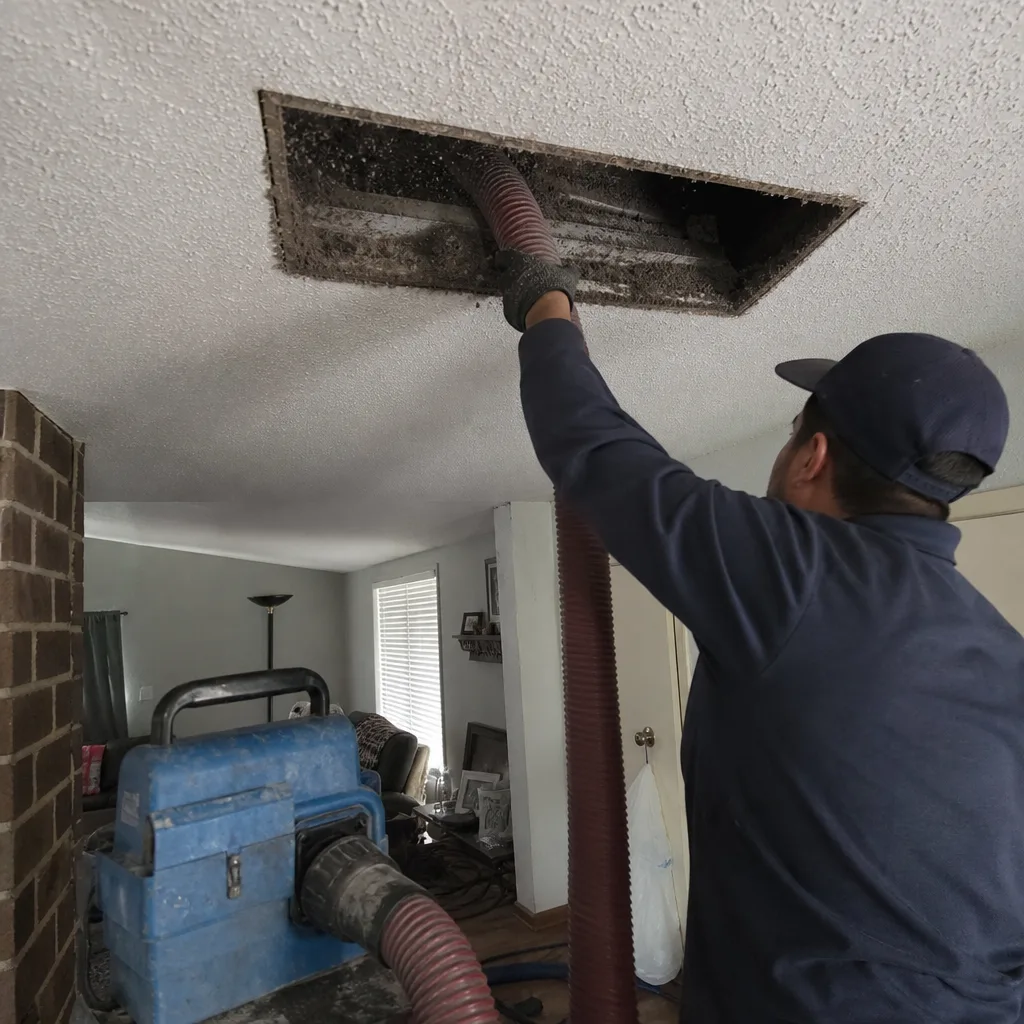 Before
 After
After