
Last updated October 15, 2026
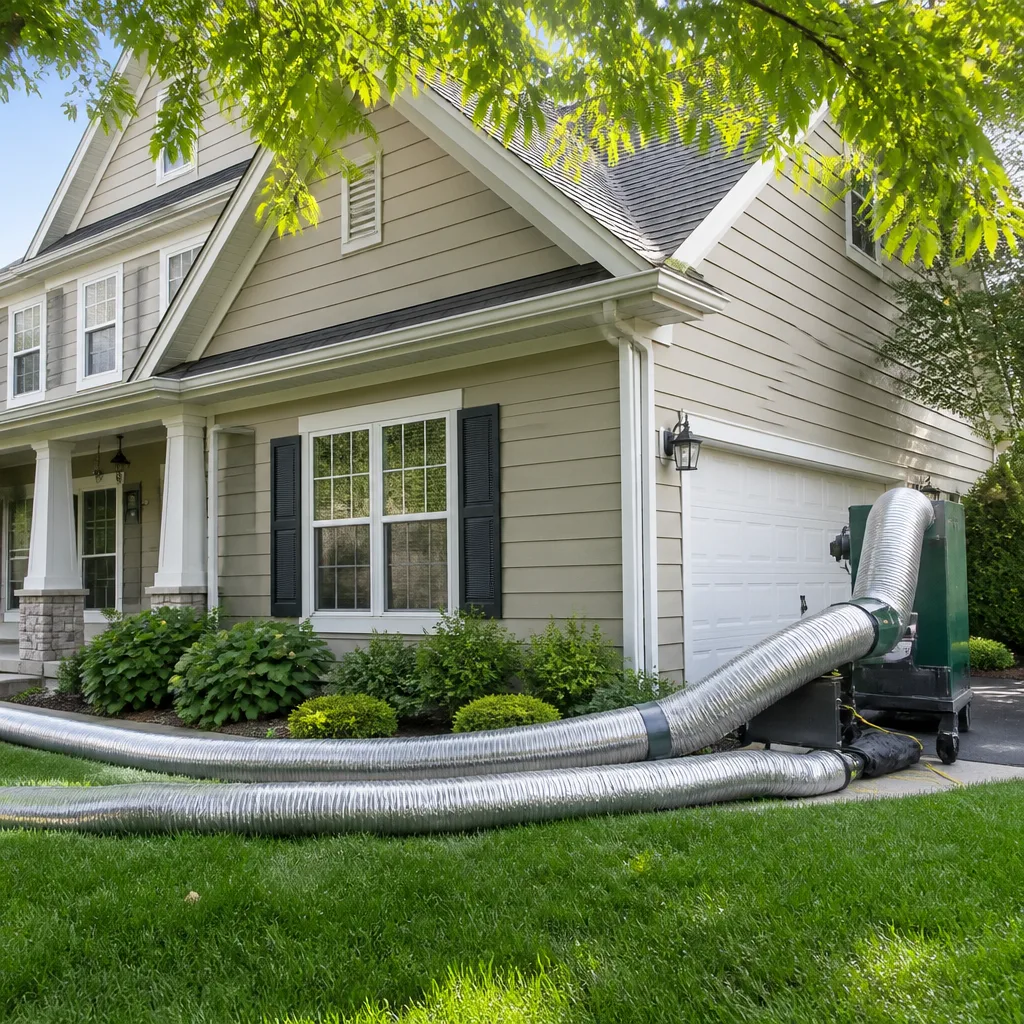 Whole-home duct cleaning
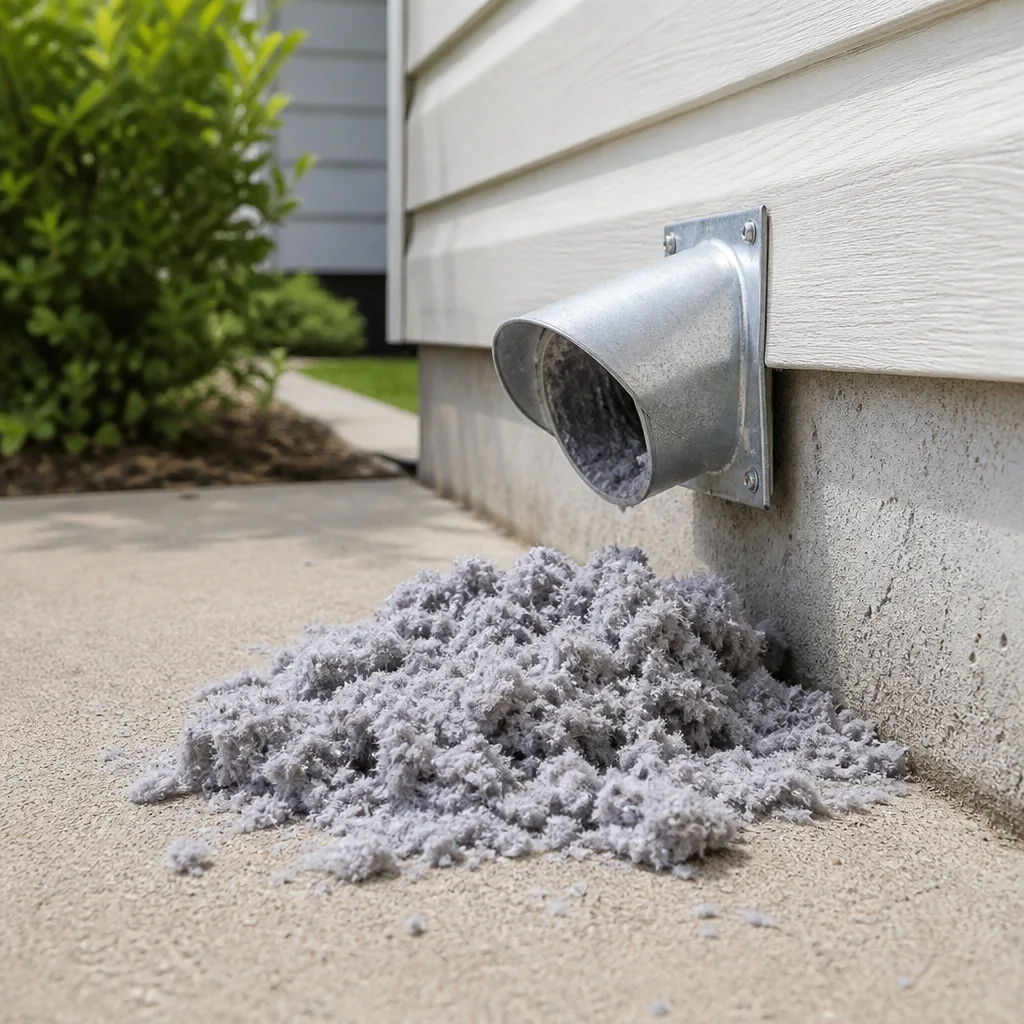 Dryer vent cleaning
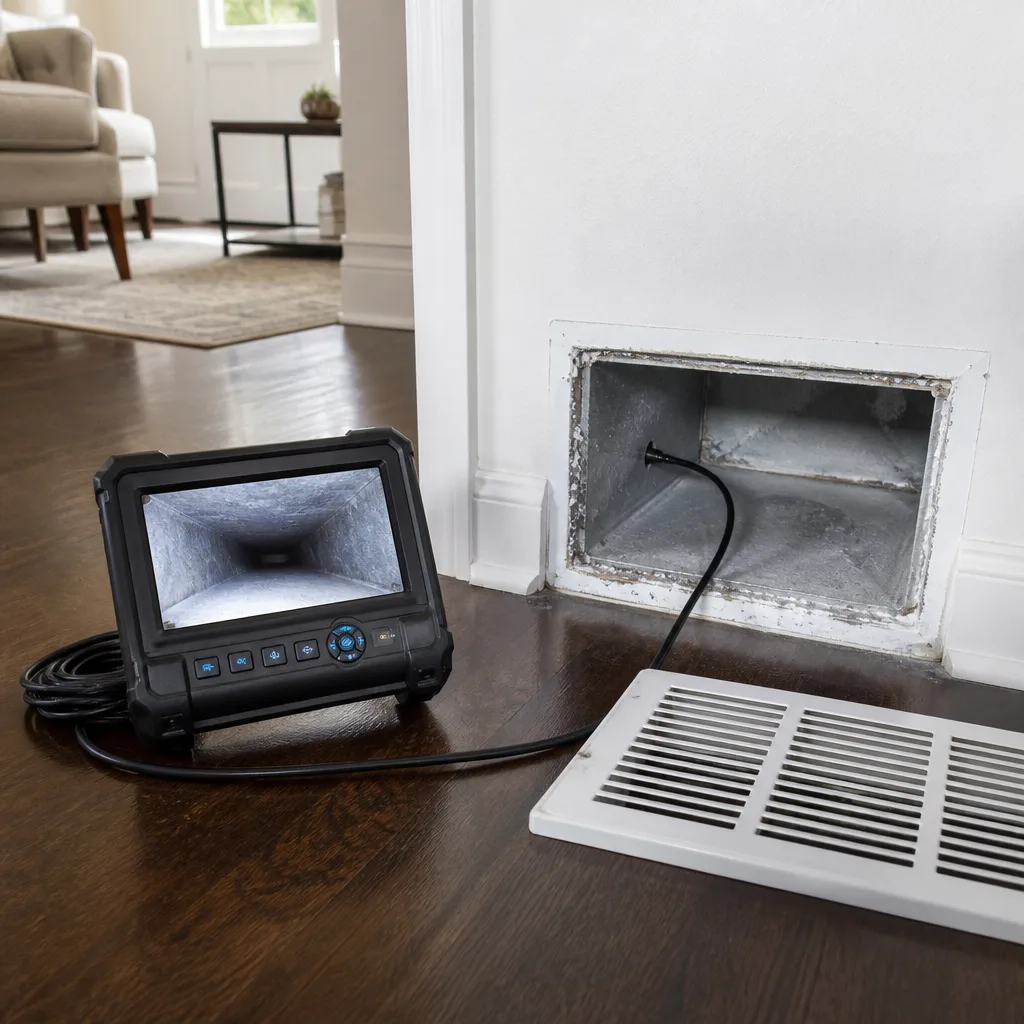 Camera inspection
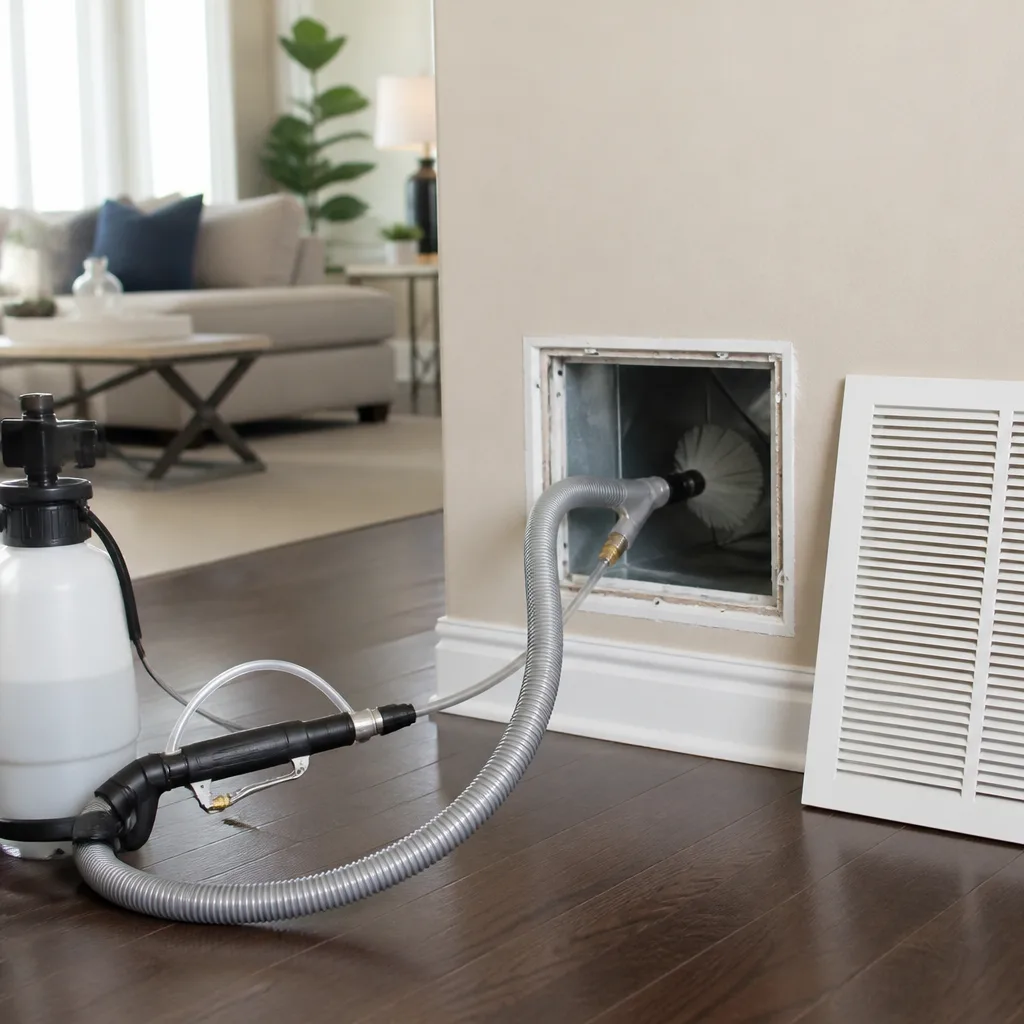 Sanitizing & deodorizing
Whole-system duct and dryer vent check with before-and-after photos - you see exactly what came out of your vents
That "$99 whole-house special" is a bait ad - the real number appears once they are in your hallway, or the "clean" is a shop-vac at the register. We photograph the inside of your ducts before and after instead.
The Complete Guide to Air Duct Cleaning in Fort Worth
Fort Worth sits on expansive clay soil that swells and shifts with every rainy season and every drought. That movement cracks foundations, and cracked foundations pull apart duct connections in attics and crawlspaces across the city. Most national air duct cleaning guides never mention this, but it changes everything about how a Fort Worth home’s duct system should be cleaned and inspected. For a local perspective, see our DIY vs Professional Air Duct Cleaning: The Fort Worth Homeowner’s Decision Guide. This guide walks you through what actually happens inside the ducts of a Tarrant County home, from the first brush stroke to the final inspection reading, so you know exactly what a proper cleaning looks like and what it should cost before anyone ever walks through your door.
Quick Answer
Air duct cleaning in Fort Worth typically costs between $450 and $900 for a whole-home system, depending on home size, number of returns, and duct condition. A proper cleaning removes years of accumulated dust, pet dander, pollen, and construction debris from your supply and return ducts using professional agitation and negative-pressure equipment. At Air Duct Cleaning in Fort Worth, we provide a written price before any work starts, so the number you approve is the number you pay.
Styles & brands we work with
Table of Contents
- How Fort Worth’s Climate Shapes What’s Inside Your Ducts
- What a Proper Air Duct Cleaning Actually Involves
- Truck-Mounted vs. Portable Equipment: What Works in Fort Worth Homes
- The Written Scope of Work: What You Should See Before Anyone Starts
- Foundation Movement, Clay Soil, and Disconnected Ducts
- How to Read Pre- and Post-Clean Air Quality Numbers
- How Much Air Duct Cleaning Costs in Fort Worth
- Why Some Quotes Are So Much Cheaper
- How to Know the Work Was Actually Done
- Common Mistakes to Avoid
- When to Call a Professional
- Frequently Asked Questions
How Fort Worth’s Climate Shapes What’s Inside Your Ducts
Fort Worth’s weather does not treat ductwork gently. We see hot, humid summers that run from May through September, with dew points regularly sitting above 70 degrees. When that saturated air moves through attic ducts, condensation forms on the exterior of flex duct and the interior surfaces of sheet metal trunk lines. That moisture binds with household dust, creating a film that ordinary air movement will not dislodge. Over years, the film becomes a layered buildup that reduces airflow and gives the air coming out of your registers a noticeable stale odor.
Spring brings oak, cedar, and grass pollen in waves. If anyone in your home has seasonal allergies, the pollen that makes it past your return filter settles in the duct system and recirculates every time the blower cycles. Winter rarely drops Fort Worth into a deep freeze, but cold snaps send your furnace into long runs with dry, dusty air that pulls accumulated particles off duct surfaces and pushes them into living spaces.
In neighborhoods like Wedgwood, Ridglea, and the historic districts near TCU, we often find ductwork that has not been opened since the home was built. The combination of high humidity swings, pollen load, and decades of dust accumulation creates a specific type of buildup that is dense near the returns and packed into every bend and fitting. A cleaning that treats the system as one uniform surface misses the reality: Fort Worth ducts accumulate material differently at the return plenum than they do at the far end of a bedroom run.
What a Proper Air Duct Cleaning Actually Involves
A real air duct cleaning is not a guy with a vacuum hose poking through a vent cover. It is a systematic process that treats the entire duct network as a connected system. Here is the sequence a competent technician follows for our Air Duct Cleaning services on a Fort Worth home:
- Pre-inspection and pressure check. Before anything is touched, the technician should walk the system with you, check the air handler, open a register or two, and identify any existing damage, disconnected sections, or signs of moisture. This is the step where nobody should be rushing.
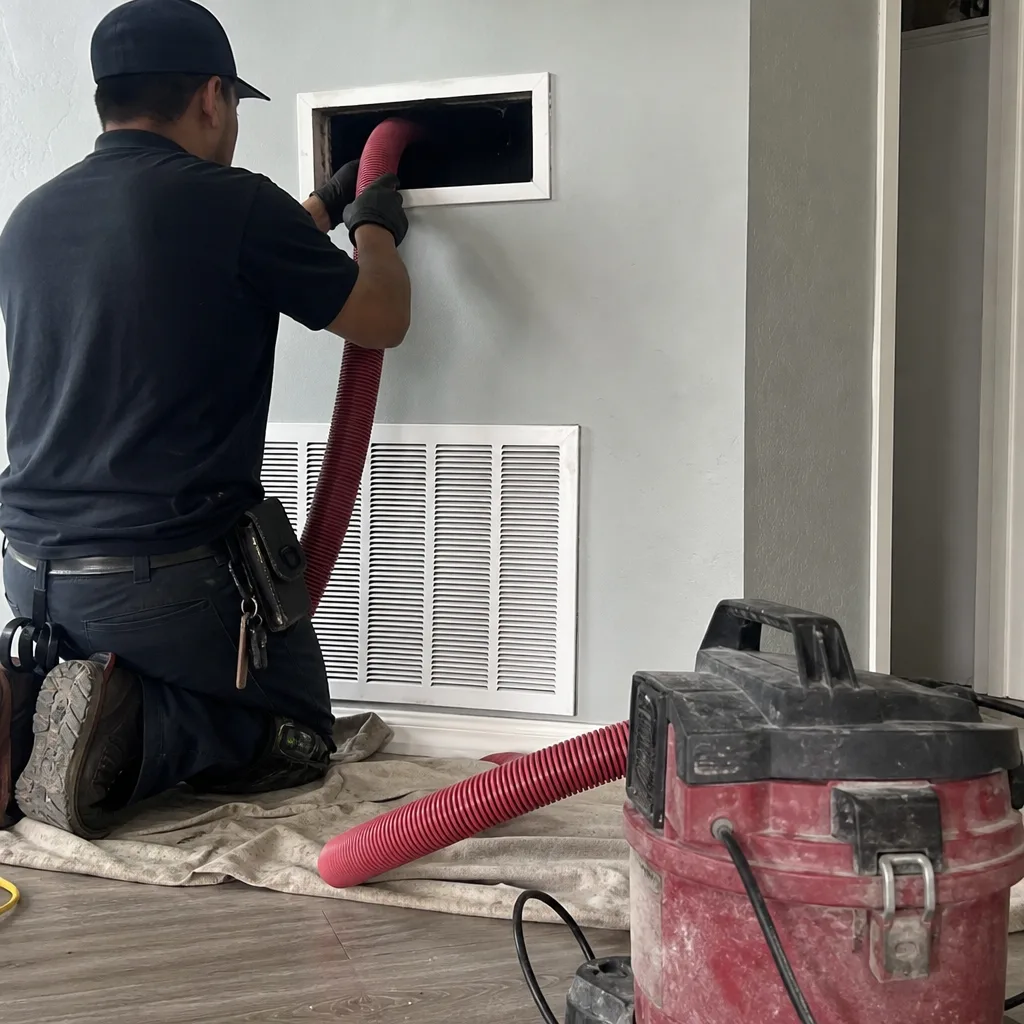
- Register and grille protection. Floor coverings go down, shoe covers go on, and the register openings are mapped. In homes with pets, this is also where we note pet hair accumulation around return openings, which is a useful indicator of overall system condition.
- Filter removal and inspection. The existing filter comes out and gets examined. A collapsed or overflowed filter tells you the system was running with significant resistance, which changes the cleaning approach.
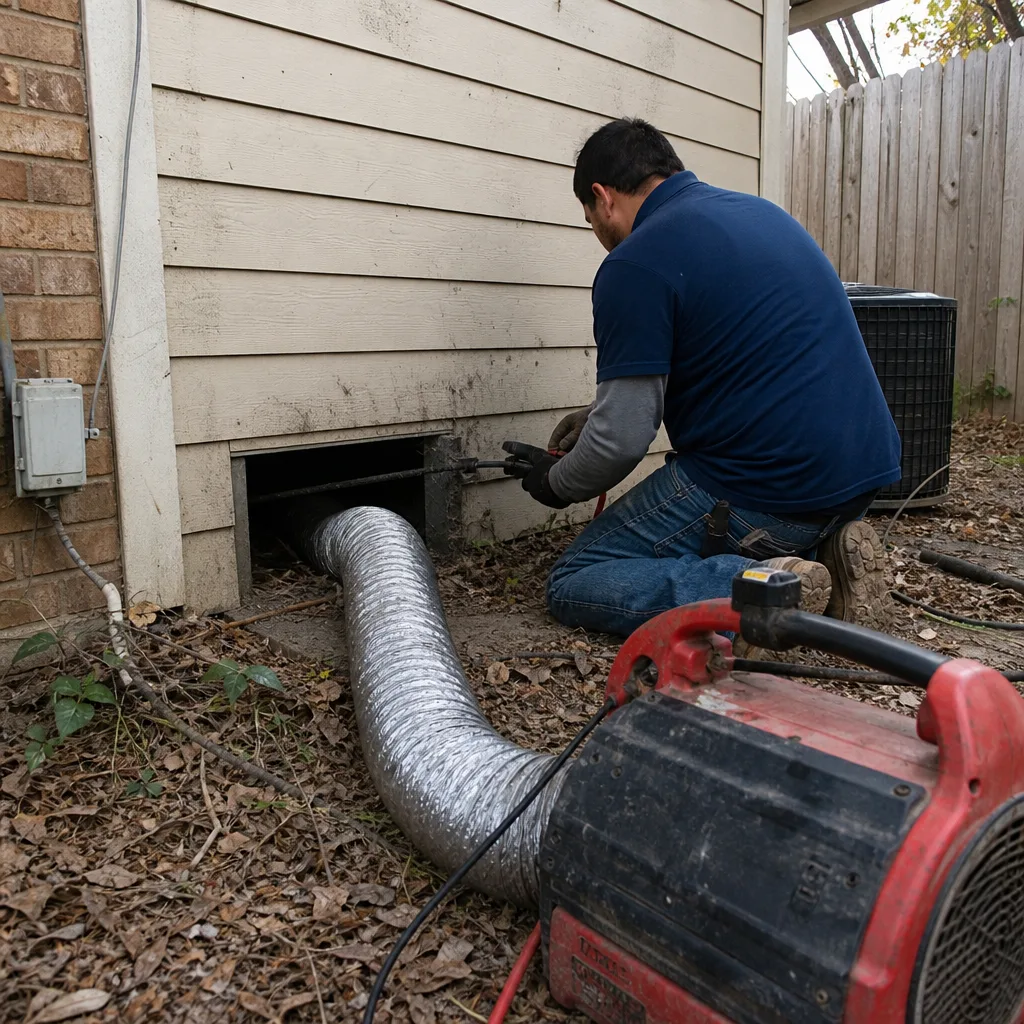
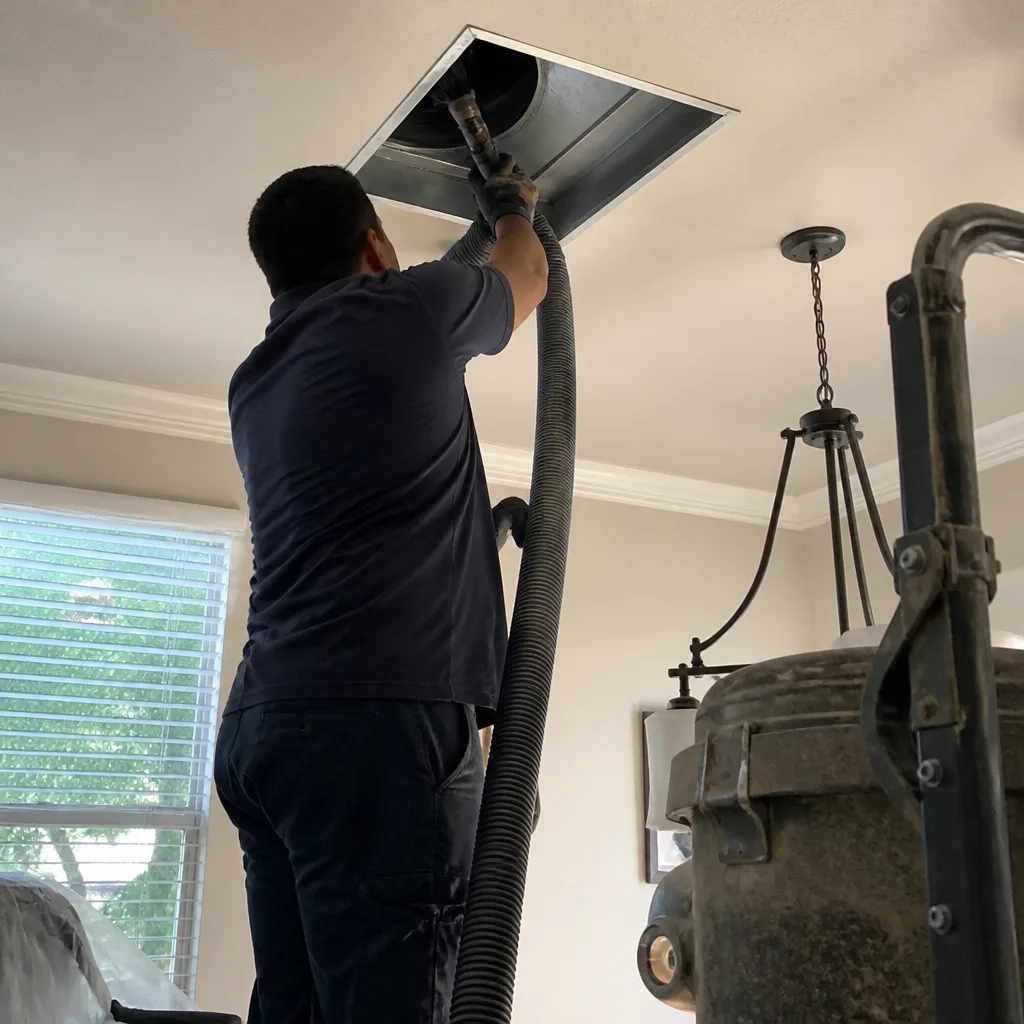
- Negative pressure setup. The blower side of the system is sealed and connected to a high-powered vacuum unit. This creates continuous negative pressure so any material loosened during agitation is pulled out of the system, not pushed into the home.
- Mechanical agitation. Each supply and return line is worked with rotating brushes, compressed air, and in some cases a specialized whip system. This is where equipment quality matters most. We run professional-grade units from Rotobrush and Nikro, which are engineered for residential duct profiles and sized to reach the full length of a typical Fort Worth ranch or two-story home.
- Air handler and coil inspection. The blower compartment and evaporator coil are inspected and, if needed, cleaned. A coil packed with dirt defeats the entire job, which is why any cleaning that skips the air handler is incomplete.
- Post-clean verification. The technician should do a visual check of the interior of several duct runs using a camera or inspection mirror, confirm the registers are reseated, and provide a summary of what was pulled out.
Each of these steps has a specific purpose. Skipping any one of them produces the same result: a house that looks cleaned but is not.
Truck-Mounted vs. Portable Equipment: What Works in Fort Worth Homes
You will hear two terms thrown around when researching Air Duct Cleaning in Fort Worth: truck-mounted systems and portable units. Both have a legitimate place, but the right choice depends on your home and your duct configuration.
A truck-mounted vacuum system runs a long hose from a powerful unit in the van to your air handler. These systems generate exceptional suction and work well for sheet metal ductwork in larger homes or commercial spaces. They are also loud, and in dense Fort Worth neighborhoods with shared driveways, the truck positioning can be a practical headache. For flex duct, which is common in many Tarrant County homes built since the 1990s, the extreme negative pressure of a truck-mounted unit can be overkill and, in the hands of a careless operator, can damage the thin plastic liner inside the flex material.
Portable professional units, including the Rotobrush and Nikro equipment we run, are designed to work inside the home at the air handler location. They create strong negative pressure while the agitation tool works each duct branch. The advantage is control: the technician can see and hear what is happening, adjust the brush speed and direction for each run, and avoid the kind of damage that a high-power blaster can cause to lightweight flex duct. A portable unit also means the work can be done quietly, which matters when there is a toddler napping or a nervous dog in the next room.
The honest guidance is this: the equipment brand alone does not determine the quality of the clean. The operator does. Professional-grade gear in skilled hands beats expensive gear in careless hands, every time. Ask who will be running the machine and how long they have been doing it. A confident answer tells you more than a brand sticker on a van.
The Written Scope of Work: What You Should See Before Anyone Starts
In the air duct cleaning industry, the gap between the phone quote and the final invoice is where customer trust gets lost. Every week, Fort Worth homeowners tell us the same story: a $79 coupon became a $600 invoice because of “unexpected” extra charges. That is why a written scope of work is the single most important document in your entire cleaning project.
A proper scope of work should be written down or sent to you electronically before any technician touches your system. It should itemize:
- The exact square footage or number of supply and return vents covered. No ambiguity about whether “the whole system” means the whole system.
- The specific services included. Supply duct cleaning, return duct cleaning, air handler inspection, coil inspection, and any sanitizing or deodorizing, listed as separate line items with their own prices.
- The price for each line item, with a total. One flat price per system, not a per-vent rate that shifts during the job.
- Anything specifically excluded. If crawl space access, second-story attic sections, or the coil cleaning are not included, it should say so in writing.
- The name and contact information of the technician or lead technician. You should know who will be in your home.
If a company will not provide a written scope of work before the job begins, treat that as a red flag. No legitimate contractor should have a problem putting the plan and the price in writing. At Mortons, the written price is produced on every visit, no exceptions. What you approve is what you pay.
Foundation Movement, Clay Soil, and Disconnected Ducts
North Texas sits on one of the most active soil types in the country. The clay that underlies most of Fort Worth expands when it absorbs water and contracts when it dries. That cycle, repeated across the seasons, causes foundations to shift. And when a foundation shifts, anything attached to it shifts too. In many homes, the supply ducts run through the slab or hang in the attic, connected to the air handler at one end and the register boots at the other. Even small foundation movement can pull duct joints apart, leaving gaps through which you are heating and cooling your attic.
We find this regularly in established Fort Worth neighborhoods like Meadowbrook, North Hi Mount, and the areas around Hulen Mall. A homeowner calls us for cleaning, and during the pre-inspection, we discover a disconnected return branch in the attic or a crushed flex line that has been sending conditioned air into the wrong space for years. The cleaning job becomes a repair conversation, and that is not a bait-and-switch. It is the reality of Fort Worth homes.
This is why the pre-inspection step matters so much. A thorough walkthrough before cleaning will reveal disconnections, crushed sections, and seams that have pulled apart. Fixing those issues before the cleaning means the system is sealed and whole before the agitation begins, which prevents dirty air from being pulled back into the ductwork after the job is done. A proper duct cleaning on a Fort Worth home includes this inspection as a standard part of the job, not an add-on.
How to Read Pre- and Post-Clean Air Quality Numbers
A reputable air duct cleaning should leave you with more than a receipt. It should leave you with evidence. At minimum, ask for a visual verification, preferably with photographs, of the interior of your ducts before and after the cleaning. Beyond that, some companies offer air quality measurements using particle counters or laser-based instruments that read the number of airborne particles in a given sample.
Here is how to interpret what you see. A pre-clean reading in a typical Fort Worth home might show elevated particle counts in the small and large categories, reflecting years of accumulated dust, skin cells, pet dander, and fabric fibers. After a proper cleaning, that number should drop significantly, and the drop should persist, not rebound within a day. If the technician shows you a post-clean number that is dramatically lower but cannot explain what was measured, how the sample was taken, or where the instrument was positioned, ask more questions. A single number without context means nothing.
The more practical verification is what you can see and feel. Open a few registers the day after the cleaning. The visible dust layer inside the register boot should be gone. Run your hand along a return grille. If it is clean, that is a good sign. And if the technician provides before-and-after photos of their own duct runs, take a look. The interior walls should show the original material color, not a gray film. In our experience, a customer who can see the difference and confirm it with the after-photos is a customer who knows the job was actually done, not just that a truck showed up for two hours.
How Much Air Duct Cleaning Costs in Fort Worth
Whole-home air duct cleaning in Fort Worth generally runs between $450 and $900. That range reflects differences in home size, number of returns, duct condition, and whether the evaporator coil or air handler requires additional work. Here is a breakdown of typical line items for a 2,000 to 3,000 square foot single-family home in the Fort Worth area:
| Service | Typical Price Range in Fort Worth |
|---|---|
| Whole-home duct cleaning (supply and return) | $450 – $700 |
| Air handler and blower compartment cleaning | $100 – $200 |
| Evaporator coil inspection and cleaning | $150 – $300 |
| Sanitizing or deodorizing treatment | $50 – $150 |
| Dryer vent cleaning (separate service) | $100 – $200 |
These numbers are for whole-system cleaning with professional-grade equipment, not a per-vent teaser price. Fort Worth’s housing stock ranges from 1950s ranches with all metal ducts to 2020s builds with uninsulated flex in the attic, and older systems with years of buildup will always cost more than a newer system that has been maintained. The key is receiving a written price that itemizes everything before work begins. Call Mortons Air Duct Fort Worth home for a written estimate specific to your home, never a vague number over the phone.
Why Some Quotes Are So Much Cheaper
Fort Worth is a competitive market for home services, and air duct cleaning is no exception. You will see advertised prices as low as $49 or $79 for “whole home” cleaning. Those prices are how a van gets parked in front of your house; they are not how a duct system gets properly cleaned. Here is what typically happens behind the scenes with the lowball offers:
- The price covers a limited number of vents or a single return. “Whole home” means something different once the technician explains that your house has more vents than the coupon covers.
- The equipment is entry-level. A router-style brush attached to a shop vacuum cannot reach more than a few feet into most Fort Worth duct runs. It dislodges debris and leaves it sitting deeper in the system.
- The air handler is not included. The dirtiest part of the system is often the blower compartment and coil. A cheap cleaning that skips those areas leaves the main contamination source in place.
- The worker is not an HVAC-trained technician. Duct systems interact with gas furnaces, electrical connections, and condensate lines. Someone with no training can do real damage in an hour.
- The upsell comes after the work starts. The $79 becomes $500 when the technician “discovers” that your system needs sanitizing, coil cleaning, or a filter upgrade. The low price was never the real price.
The honest approach is to decide what you are actually buying. If you want the interior of your duct system cleaned to the standard you would expect in your own home, ask for a written price for a whole-system cleaning before anything starts. If a company will not give you that, you have your answer.
How to Know the Work Was Actually Done
The most common question we get from Forth Worth homeowners after a cleaning is some version of “how do I know you actually did anything?” It is a fair question, and a good cleaning company should welcome it. Here is what proper verification looks like:
First, demand before-and-after photos. Not stock photos, not a brochure, but actual photographs of your duct interiors. We provide a photo of the clean-up before the crew leaves, so you have visual proof that your home was left better than the crew found it. Second, ask to see the collection container or vacuum contents. The amount of material pulled from a typical home after several years is substantial, and a technician who is proud of the job will show you. Third, do a physical inspection of a few registers the next day. Remove a vent cover in a high-traffic room and run a damp white cloth inside the boot. If it comes back gray, ask questions.
Finally, pay attention to the feel of your system. A properly cleaned system moves air more freely. You may notice that rooms that were always warmer in summer are more comfortable, that the system cycles a little less frequently, and that the dust on your furniture does not accumulate as quickly. Those changes do not happen by accident. They happen because the air is moving through clean ducts instead of dragging debris off dirty ones.
Common Mistakes to Avoid
- Hiring based on a coupon price. The lowest advertised price in Fort Worth is almost never the final price. Get a written quote for your entire system before you compare numbers.
- Skipping the furnace or air handler cleaning. The blower and coil hold some of the worst buildup in the home. A duct cleaning that does not address the air handler leaves the primary source in place.
- Not checking for disconnected ducts during the inspection. Fort Worth’s clay soil movement regularly pulls duct joints apart. If the technician does not check attic connections, the cleaning may be incomplete on a system that is leaking air.
- Accepting a visual inspection without photos. If the company will not provide before-and-after images, you have no way to verify the quality of the work. Demand photographic evidence.
- Not asking about the equipment and the technician. The same brand of machine in the hands of two different operators produces very different results. Ask who will be doing the work and what they will use.
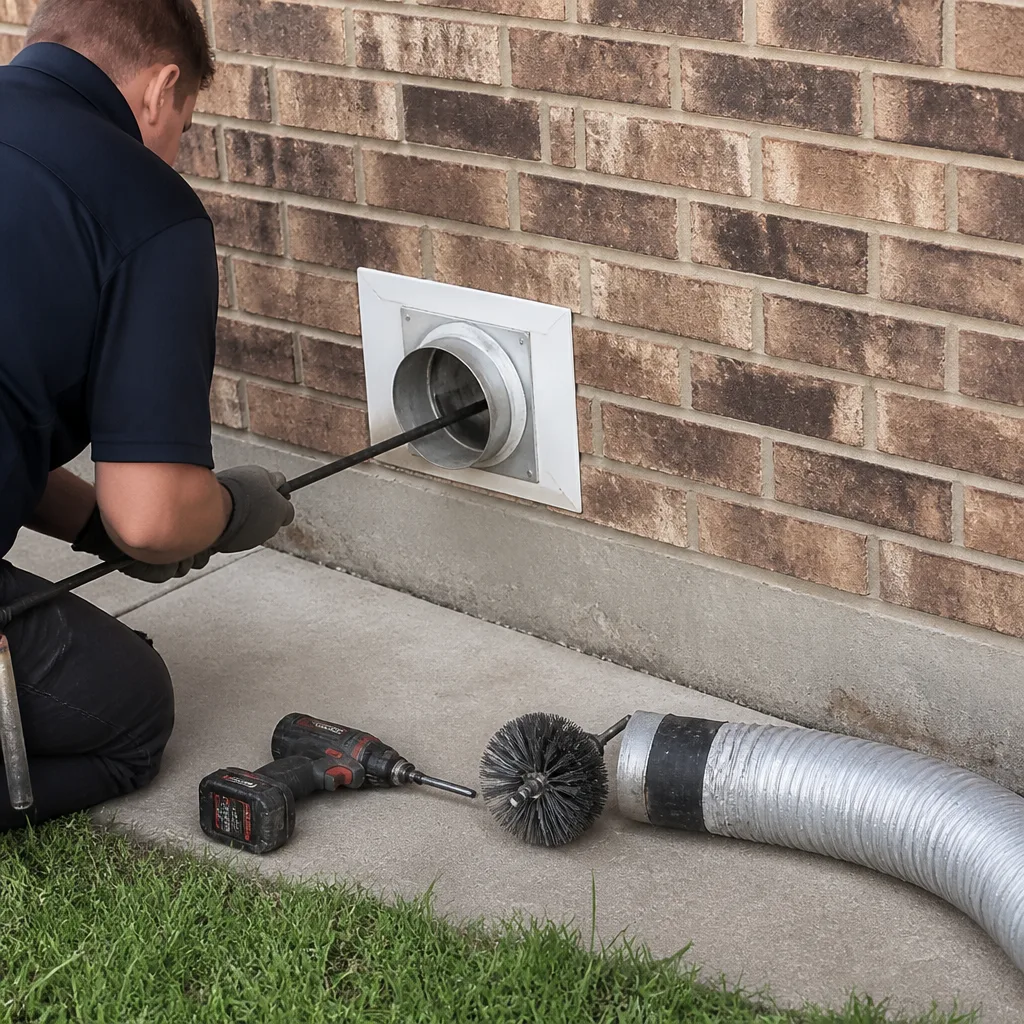
- Ignoring the dryer vent. Many duct cleaning companies skip the dryer vent because it is a separate service. A clogged dryer vent is a fire hazard, and Dryer Vent Cleaning in Fort Worth should be part of your annual home maintenance plan, not an afterthought.
- Waiting until the system is visibly dirty. If you can see dust trails around your register covers, the system has been circulating debris for a long time. Clean earlier, not later.
When to Call a Professional
There is no universal clock for when a Fort Worth home needs duct cleaning. But certain signals tell you it is time. If you dust a surface in the morning and it is covered again by evening, the system is likely circulating fine particles. If one room is consistently warmer than the others in July, a partial blockage or disconnection may be restricting airflow. If anyone in your household has unexplained allergy symptoms that improve when you leave home, your ducts are a reasonable place to look. If you have done a major renovation, the construction dust is now inside the system and will not leave on its own. If you have pets and notice visible hair collecting around return grilles, the accumulation is also happening inside the ductwork. If you just moved into an older Fort Worth home and do not know when the ducts were last cleaned, assume it has been years. Mortons Air Duct Fort Worth offers free estimates in Fort Worth. Call (682) 432-0424 and we will answer the phone. A real person, not a recording, not a bot.
Frequently Asked Questions
Whole-home air duct cleaning in Fort Worth typically costs between $450 and $900, depending on home size, system condition, and whether the coil and air handler are included. You should receive a written price for the full scope before any work begins. Call (682) 432-0424 for a written estimate based on your specific home; estimates are free and there is no obligation.
For most Fort Worth homes, every 5 to 7 years is a reasonable schedule under normal conditions. Homes with multiple shedding pets, a recent renovation, or residents with significant allergies may benefit from cleaning every 3 to 4 years. The honest answer depends on what is actually inside your system, which is why a visual inspection should precede any cleaning recommendation.
Low-priced quotes usually cover fewer vents, skip the air handler and coil, use entry-level equipment, or rely on an upsell once the technician is inside the home. The advertised price may not reflect what your actual home requires. Ask for a written, itemized price for your entire system before comparing any quotes. Call (682) 432-0424 for a straightforward written estimate.
A trustworthy cleaning includes before-and-after photos of your duct interiors, a summary of what was removed, and a visible difference at the register boots and returns. You should also notice improved airflow and slower dust accumulation in the weeks after the job. If a company provides no photographic evidence and no walkthrough summary, ask for it.
Yes. The expansive clay soil under much of Fort Worth causes foundations to shift seasonally, and those shifts can pull duct joints apart in attics and slabs. A proper duct inspection should include checking connections at the air handler and register boots. Loose connections mean you are sending conditioned air into areas you are not living in, which costs you money and defeats the purpose of a clean system.
A written scope of work should list every service covered, including supply and return ducts, air handler, coil, and any treatments, with a price for each line item. It should also list exclusions and identify the technician who will do the work. If a company will not put the plan and the price in writing before starting, do not let them start. Call (682) 432-0424 and we will provide a written price on every visit, before any work begins.
The Bottom Line
Air duct cleaning in Fort Worth is not a luxury service. It is a maintenance task made more essential by the city’s clay soil, humidity swings, and heavy pollen load. A proper cleaning follows a systematic process: inspect, protect, seal, agitate, verify. The price should be written down before anyone starts, the equipment should be professional-grade, and the evidence of the work should be visible when the crew leaves. If a company cannot meet those standards, you are better off waiting. For additional help, explore more guides & resources on our blog. Mortons Air Duct Fort Worth was founded in 2005 and has been serving Fort Worth through the Cedarwell family ever since. We provide a written price before any work starts, protect your floors with shoe covers and drop cloths, run professional Rotobrush and Nikro equipment, and back every job with the 365-Day Done Right Promise. Call (682) 432-0424 and talk to a real person about your home’s air, any day, any hour.
Written by Paul Adeyemi, Owner at Mortons Air Duct Fort Worth, serving Fort Worth since 2005.
See the difference
 Before
 After
After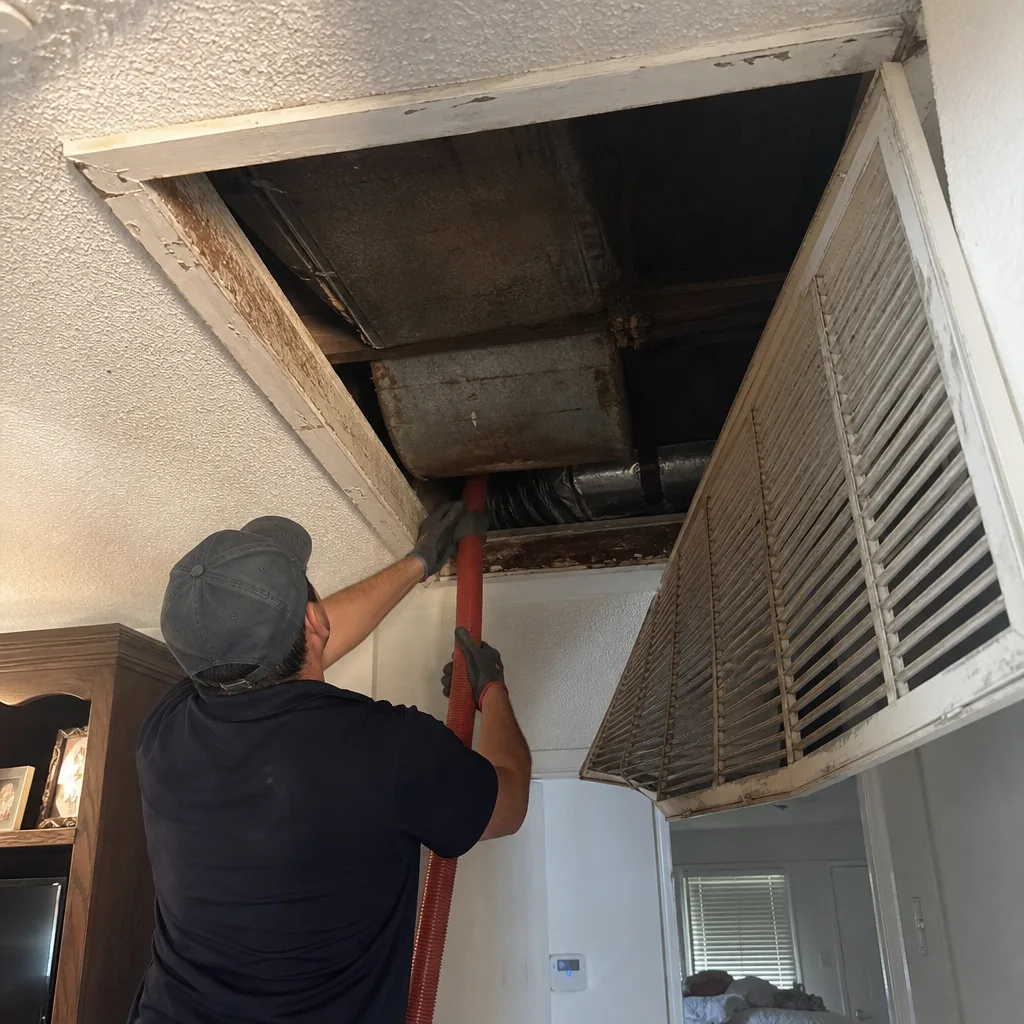 Before
 After
After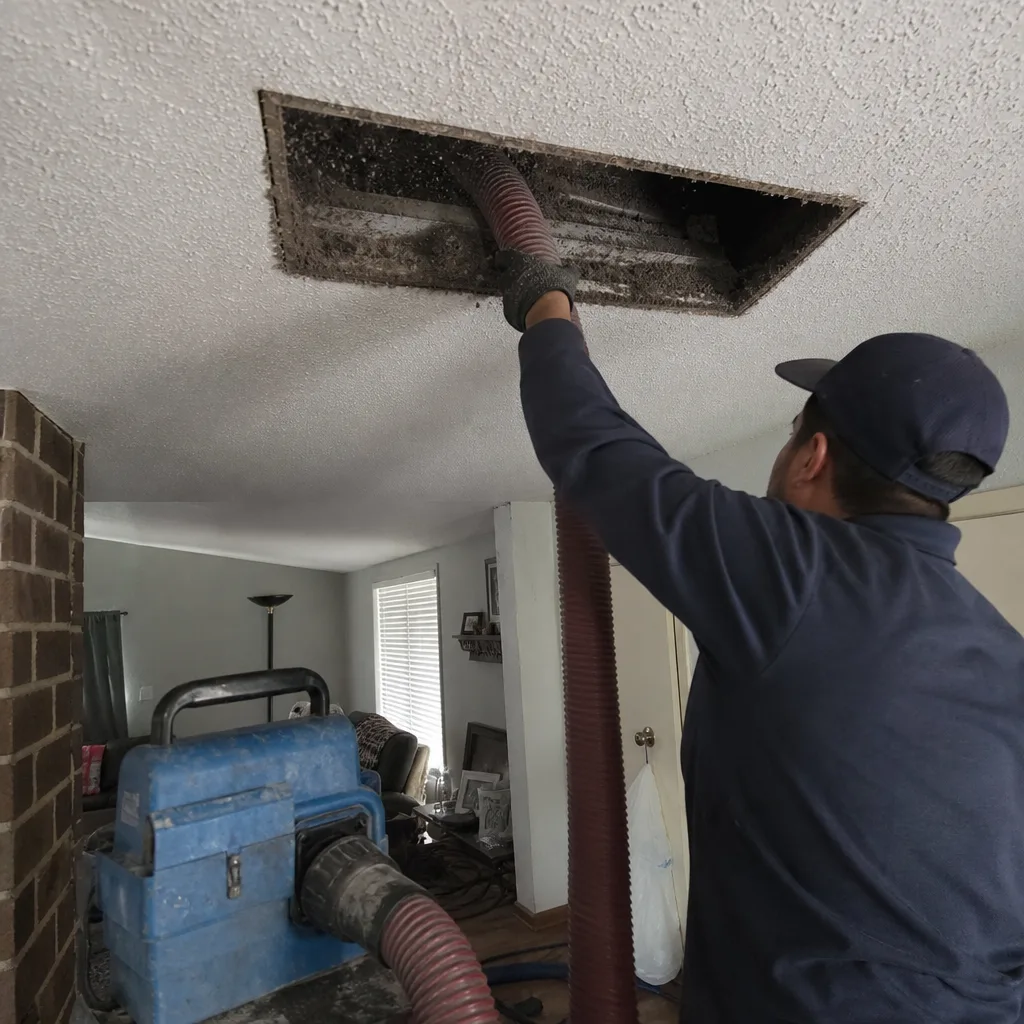 Before
 After
After