
Last updated October 15, 2026
 Whole-home duct cleaning
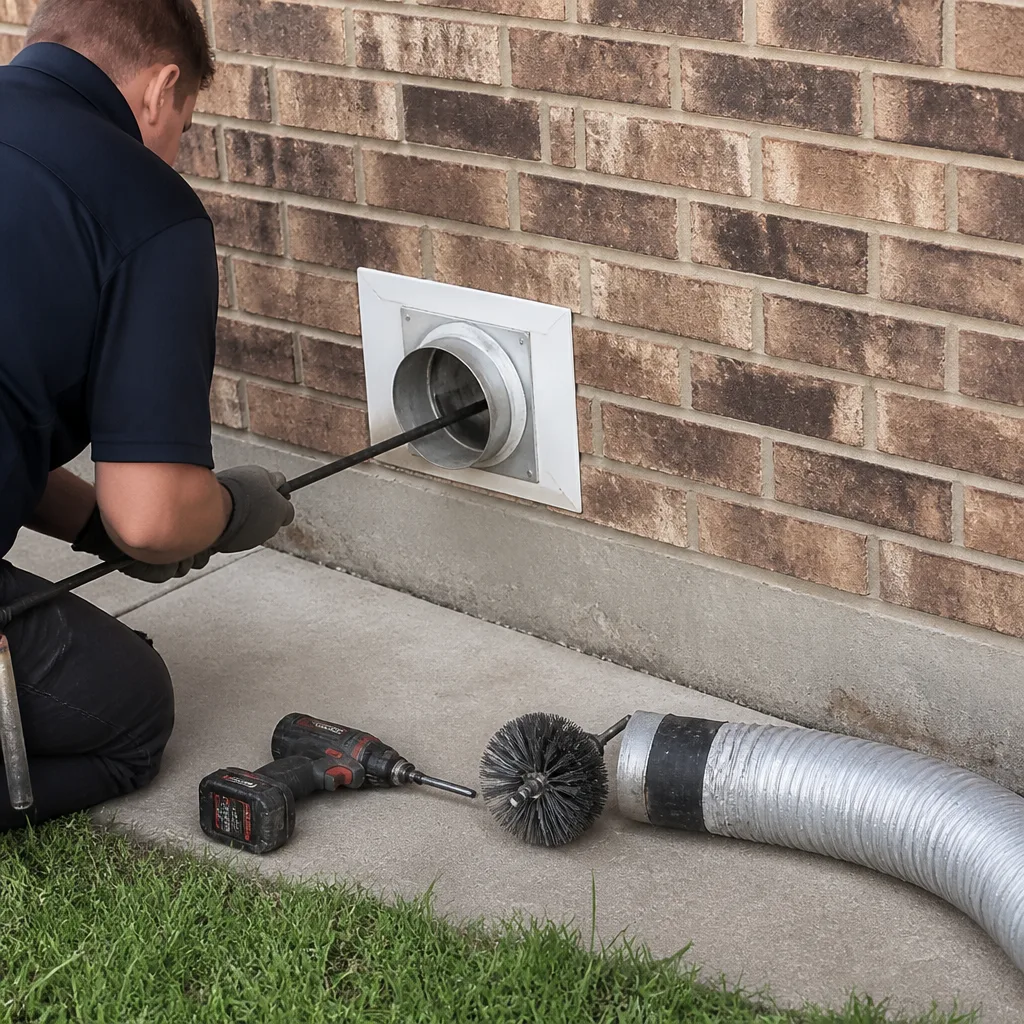
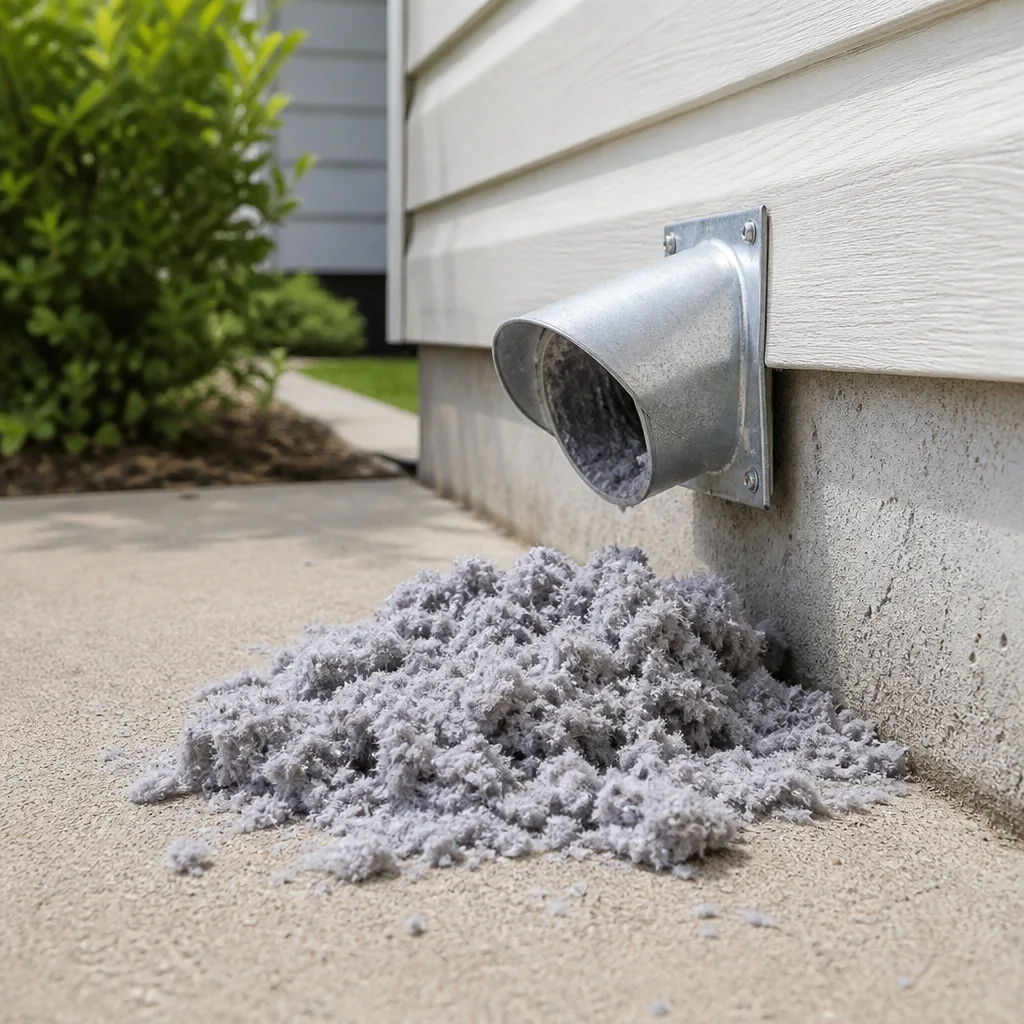 Dryer vent cleaning
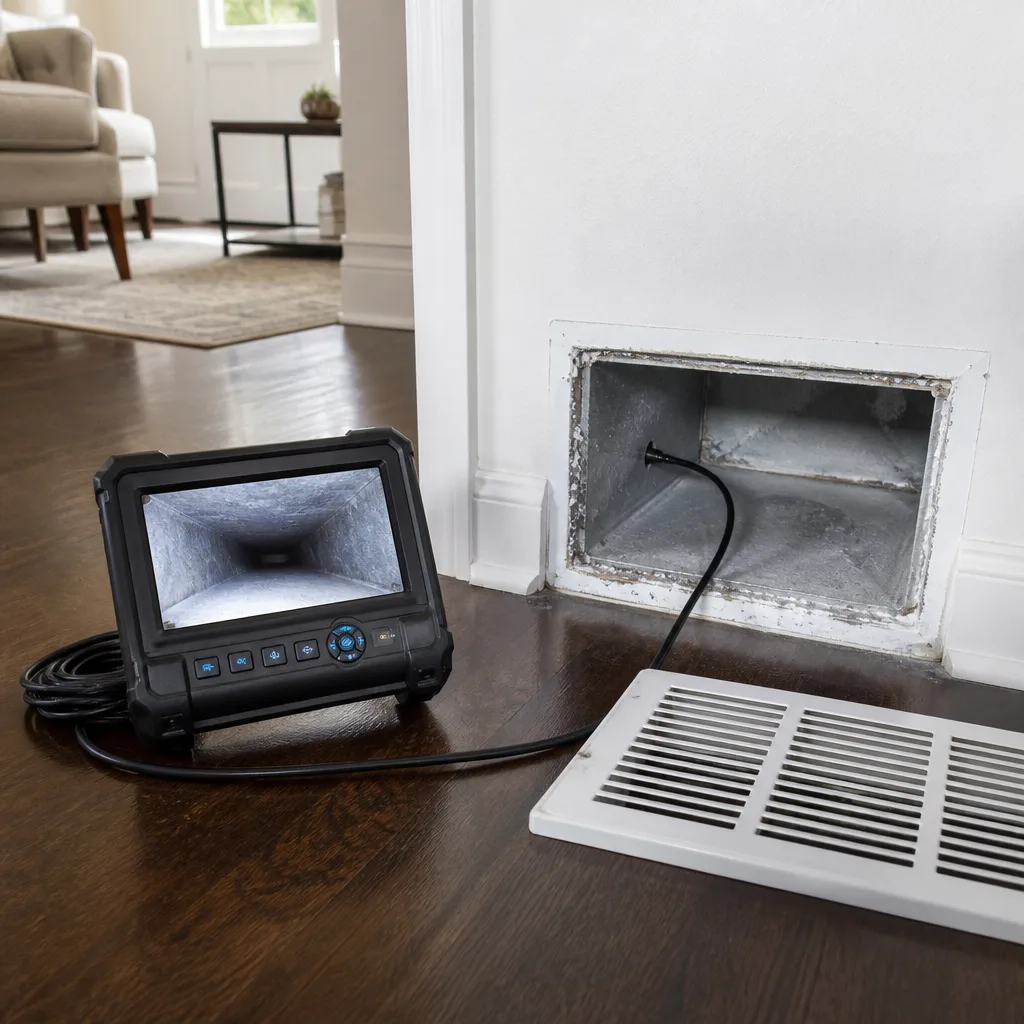 Camera inspection
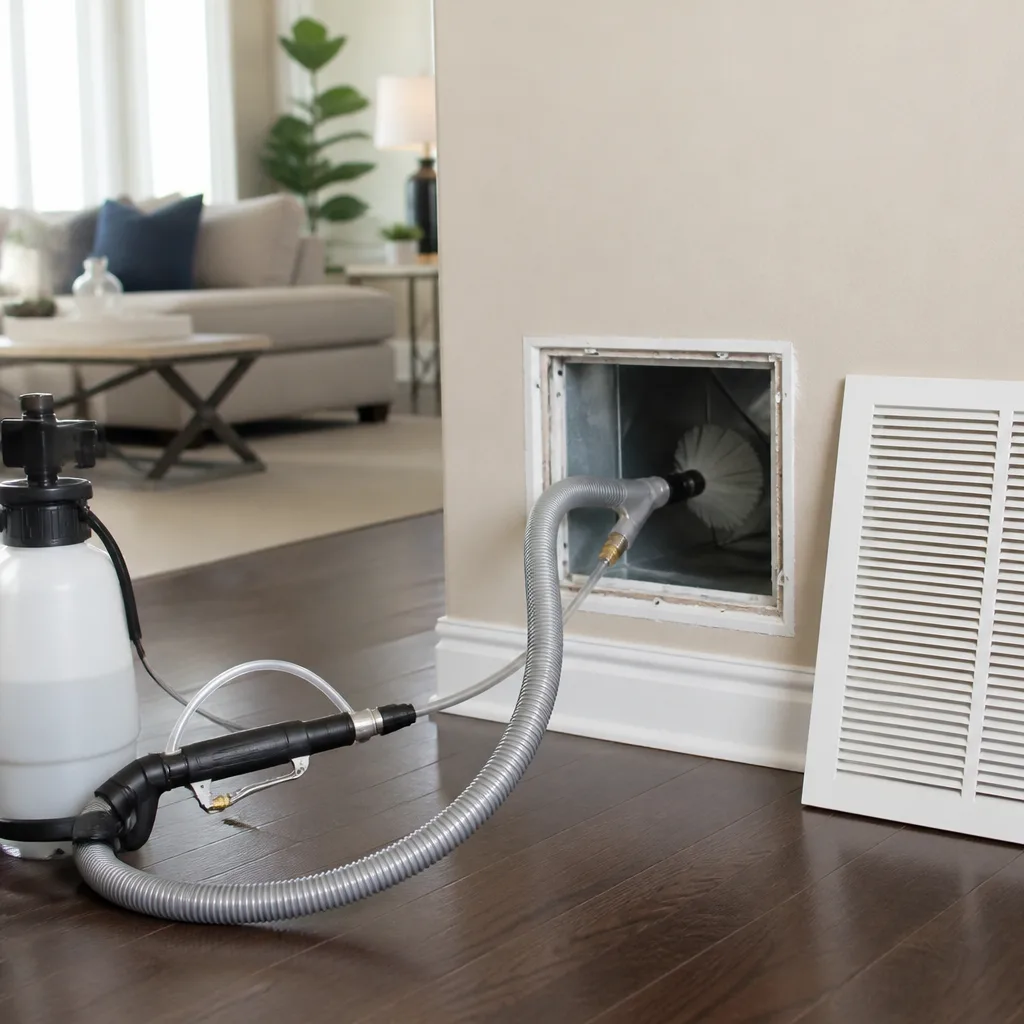 Sanitizing & deodorizing
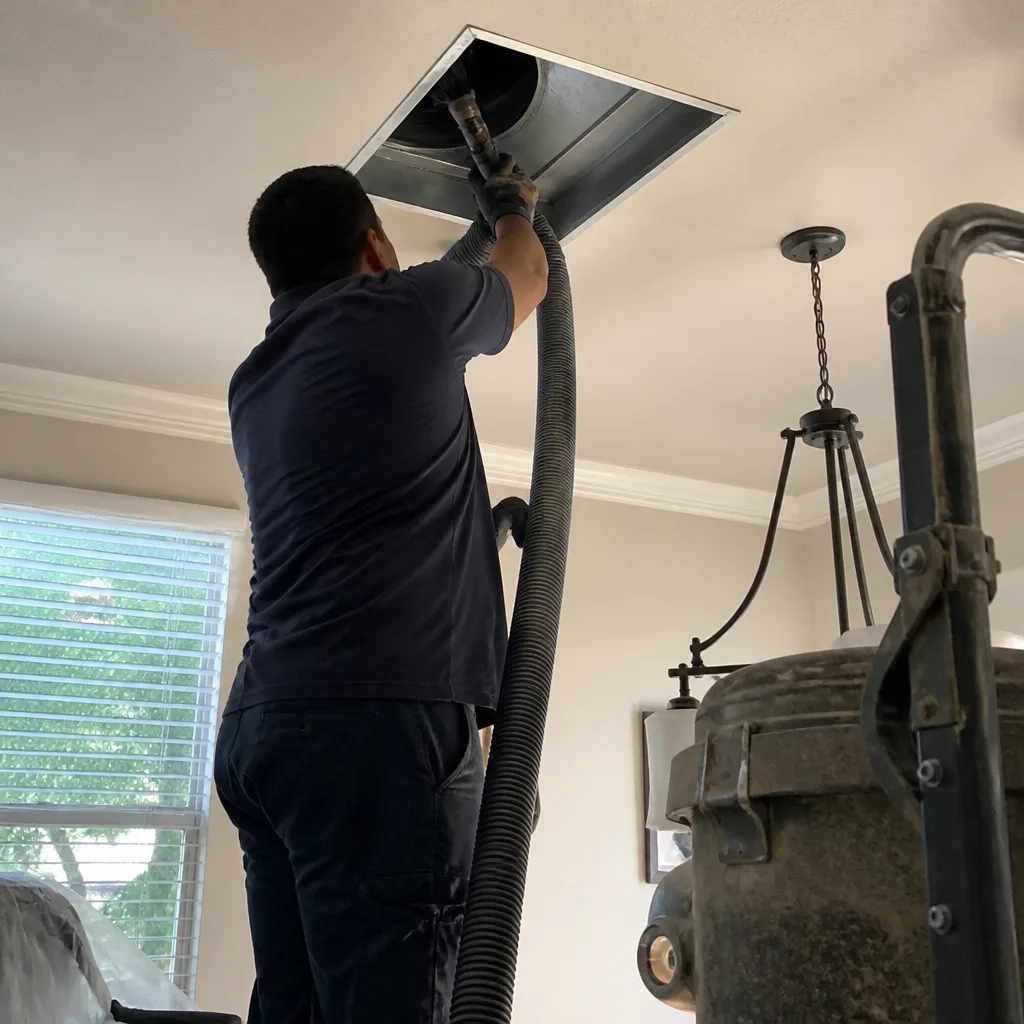
Whole-system duct and dryer vent check with before-and-after photos - you see exactly what came out of your vents
That "$99 whole-house special" is a bait ad - the real number appears once they are in your hallway, or the "clean" is a shop-vac at the register. We photograph the inside of your ducts before and after instead.
Air Duct Cleaning Warning Signs: A Fort Worth Homeowner’s Reference Guide
Here’s something most guides won’t tell you: the dust you can see at a supply register is usually the last chapter of a much longer story. By the time a Fort Worth house shows visible buildup around the vents, the duct system has been quietly collecting pet hair, sheetrock dust from past renovations, and fine North Texas clay soil for months or even years. The earlier warning signs are easier to miss and easier to dismiss: a bedroom that never quite cools down in August, a dog that suddenly avoids its favorite nap spot near a floor register, a toddler waking up congested during HVAC season. This guide works backward from the obvious symptoms to the quieter, earlier signals Fort Worth families with kids and pets are most likely to notice first, and for a deeper dive, see The Complete Guide to Air Duct Cleaning in Fort Worth. Early recognition is the whole point, because catching duct issues in the early stage costs less and keeps the house more comfortable through every sweaty Fort Worth summer.
Styles & brands we work with
Quick Answer
The most common early warning signs of air ducts that need cleaning in Fort Worth are room-to-room airflow differences, frequent filter loading, intermittent musty smells when the system first kicks on, and pets behaving differently near registers. These appear long before visible dust buildup or a persistent odor throughout the house. If you notice two or more of these signs at the same time, the duct system itself is likely the story, and a professional inspection with a written price up front is the logical next step.
Table of Contents
- Room-by-Room Airflow Inconsistency: The Earliest Mechanical Signal
- Pet-Specific Warning Signs Fort Worth Homeowners Should Watch For
- Toddler and Infant Signs Parents Often Attribute to Something Else
- Musty Smells: What the Timing Tells You About Where the Problem Lives
- Filter Change Frequency as a Diagnostic Tool
- Dust Buildup: The Late-Stage Signal Nobody Should Ignore
- Unusual System Sounds and Runtime Patterns
- Post-Renovation and Post-Move-In Signals
- Common Mistakes to Avoid
- When to Call a Professional
- Frequently Asked Questions
- The Bottom Line
Room-by-Room Airflow Inconsistency: The Earliest Mechanical Signal
In our experience cleaning ducts across Fort Worth, the single most common early warning sign is a room that does not hold temperature like the rest of the house. A bedroom over the garage runs six degrees warmer than the living room. A nursery at the end of a long duct run struggles to reach the thermostat setting. A bathroom never seems to get warm air in January. Homeowners usually attribute this to insulation, window quality, or a weak HVAC unit. Sometimes that’s right. But often, the duct branch serving that room is partially restricted by accumulated debris, a pinched flex duct, or a return path that is starved for air.
Here is a simple test that costs nothing and takes ten minutes:
- Set the system fan to ON, not AUTO, so air moves continuously.
- Cut a tissue or single square of toilet paper into strips about one inch wide.
- Hold a strip at each supply register, one room at a time, at the same distance from the grille.
- Compare how far the strip deflects from room to room.
- Note any room where the strip barely moves or does not move at all.
A weak register in one room while the rest of the house blows strong is a mechanical early warning. It does not mean a cleaning will fix everything, but it does mean the duct system deserves a look before the Fort Worth summer pushes the system to its limit. If you want to explore what a full cleaning involves, see our guide on Air Duct Cleaning in Fort Worth.
Pet-Specific Warning Signs Fort Worth Homeowners Should Watch For
Dogs and cats are honest thermometers for air quality and airflow, and they will often tell you something is off before you notice it yourself. One of the quietest early signals we hear about from Fort Worth families involves a pet changing its behavior around a specific register. A dog that slept every night on the vent in the hallway suddenly moves to a different room. A cat that always sat on the return air grille stops sitting there. These changes usually get written off as pet moodiness. But pets seek out cool air or warm air deliberately, and when a duct branch loses delivery, the spot near that register stops being comfortable. The animal notices in a day. The human notices in a month, if at all.
Other pet-specific signals to watch for:
- Increased grooming in certain rooms: airborne dust and dander settle on fur, and a cat or dog will groom more in a room with higher particulate levels.
- Sneezing or reverse sneezing indoors but not outside: if symptoms clear up when the animal is outdoors, the indoor air delivery system is a suspect.
- Shedding accumulation at return grilles: Fort Worth’s long spring and fall shedding seasons push a huge amount of hair into the return side of the system. If the return grille looks fuzzy after two weeks, the ducts behind it are collecting the same material at a faster rate.
- Pets avoiding carpet near floor registers: dusty discharge can make the carpet around a supply register feel gritty, and animals with sensitive paw pads will avoid it.
Heavy shedding seasons in North Texas, roughly March through May and September through November, accelerate return duct accumulation dramatically. A house with two indoor dogs and a cat can load a return duct with visible hair and dander within a single season. That material then conditions the air passing over it every time the system runs. The good news for families with pets: professional Air Duct Cleaning services using equipment like Rotobrush and Nikro systems are designed to pull that kind of accumulated hair and dander out of the ductwork without pushing it back into the living space. That matters when a toddler shares floor time with a golden retriever.
Toddler and Infant Signs Parents Often Attribute to Something Else
Parents in Fort Worth tell us some version of this story regularly: the baby wakes up congested in the mornings during fall and spring, the toddler rubs his eyes after nap time, and the pediatrician says it is seasonal allergies or a cold that keeps coming back. Those are reasonable explanations. North Texas allergy seasons are long and intense. But when symptoms are consistently worse at home and better at daycare, school, or grandma’s house, the house itself deserves a closer look.
Specific patterns that point toward the duct system rather than outdoor allergens include:
- Persistent morning congestion that clears after an hour or two out of the house: if the HVAC ran overnight and the child wakes congested, the air delivery system is a prime suspect.
- Nighttime coughing during HVAC season that stops when the system is off: this is a pattern worth tracking for a week or two before dismissing it.
- Eye irritation in one room more than others: small children who crawl and play on the floor are closer to supply registers and take in a higher concentration of whatever the ducts deliver.
- Respiratory symptoms that improve after a filter change and then return within a few weeks: this suggests the ducts are re-contaminating the air faster than the filter can handle.
None of this is medical advice, and a pediatrician should always be the first call for respiratory concerns. But from a building-mechanics standpoint, a child’s lungs are a sensitive diagnostic instrument. When a house has not had its ducts inspected in years and a small child has unexplained indoor respiratory symptoms, the duct system is a reasonable place to gather information. We never use scare tactics about this; the reality is simply that dirty ducts deliver dirtier air, and small children breathe more of it per pound of body weight than adults do.
Musty Smells: What the Timing Tells You About Where the Problem Lives
A musty smell from the vents is the warning sign most Fort Worth homeowners recognize first, but the timing of the smell tells you more than the smell itself. There are two distinct patterns, and they point to different source locations inside the system.
A smell that appears when the system first kicks on and fades within a few minutes typically points to accumulation on or near the evaporator coil or in the supply plenum. The system has been off. Moisture has condensed on the coil. When the blower starts, air passes over that damp, dusty surface and carries the odor through the supply ducts. Once the coil dries off or the air clears the supply run, the smell fades until the next long off-cycle. This pattern is common in Fort Worth because the shoulder seasons, especially October and April, produce short cooling runs followed by long humid off-cycles.
A smell that lingers while the system runs and does not clear within several minutes usually points deeper into the supply or return ductwork itself. Something is holding moisture or organic material somewhere in the duct run: a return duct pulling from a humid crawl space, a supply branch with a small air leak pulling attic air, or accumulated debris that has absorbed humidity over time. The smell is continuous because the air is continuously passing over the source.
Here is the key distinction: a quick-clearing smell is a surface condition. A lingering smell is an accumulation condition. The first can sometimes be addressed by coil cleaning and proper filter hygiene. The second usually requires a duct inspection and, in many cases, a professional cleaning to remove the material holding the odor; see DIY vs Professional Air Duct Cleaning: The Fort Worth Homeowner’s Decision Guide to weigh your options. For Fort Worth homes with pier-and-beam foundations or older flex-duct systems, lingering musty smells deserve attention before the humid season locks the problem in place.
Filter Change Frequency as a Diagnostic Tool
Most Fort Worth homeowners think of the air filter as a maintenance item: change it every 90 days, or every 30 days if you have pets, and move on. That is fine as a maintenance habit. But the filter is also a diagnostic tool, and how quickly it loads up tells a story about the ducts behind it.
Here is the simple framework:
- A 90-day filter that is clean at 90 days: the system is moving relatively clean air. The ducts are likely in decent shape.
- A 90-day filter that is visibly gray and loaded at 30 days: something upstream or downstream is feeding the system more particulate than it should handle. In a Fort Worth house with pets, it may be return-side accumulation in the ducts recirculating through the filter. In a house near recent construction or major roads, exterior dust is a factor.
- A filter that clogs fastest during mild months when windows are closed and the system runs lightly: indoor sources, not outdoor air, are driving the load. That points to the duct system or the return plenum.
The filter does one job: it protects the equipment and captures airborne particles moving through the return side. It cannot clean the ducts. If the ducts themselves hold a layer of dust, pet hair, and fine Fort Worth clay soil, every system cycle stirs that material back into the airflow, and the filter loads faster as a result. When filters start loading at twice their expected rate, the filter is not failing. The filter is telling you the ducts are the story. Upgrading to a better filter, including options from Honeywell or Aprilaire, can improve filtration, but no filter removes debris already accumulated inside the ductwork. That takes a physical cleaning.
Dust Buildup: The Late-Stage Signal Nobody Should Ignore
Visible dust around supply registers is the warning sign most people already know, and it is worth repeating here with one important clarification: this is a late-stage signal. By the time dust is visible on the vent covers, the interior surfaces of the supply ducts have usually been coated for a long time. The visible dust is the overflow.
What to look for in a Fort Worth home:
- Gray or tan dust streaking from the edges of supply registers onto the ceiling or wall: the tan color often includes fine North Texas clay soil tracked into the house and drawn into the return side.
- Dust re-appearing within two to three days after cleaning a room: the supply ducts are delivering dust as fast as surfaces can be wiped down.
- Dark filtration lines forming on carpet around floor registers: this is the classic late-stage signal. The carpet is acting as a filter because the air leaving the register is carrying enough particulate to stain fibers over time.
- Clumps of dust or debris falling when a register cover is removed: if you can safely remove a supply register and see material resting on the inside surfaces of the duct, that material has been accumulating for a while.
None of these signs are a reason to panic. They are a reason to make a plan. Duct cleaning is a scheduled, routine service, not an emergency room visit. Families who notice these signals in a Fort Worth house built in the 1980s, 1990s, or early 2000s are often looking at ducts that have never been cleaned. The good news is that a professional cleaning with commercial equipment removes the accumulated material rather than masking it. If you want to understand what the process actually looks like start to finish, our Mortons Air Duct Fort Worth home page walks through the service step by step.
Unusual System Sounds and Runtime Patterns
Air ducts do not make noise unless something is wrong. A properly sealed and clean duct system moves air quietly. When a homeowner starts noticing sounds from the ducts, the system is usually asking for attention in one of several ways.
Common sound-based warning signs include:
- Whistling or hissing at specific registers: this usually indicates a restriction, often a damper partially closed, a kinked flex duct, or debris accumulation narrowing the opening.
- Rattling from the return grille when the system starts: loose debris against the grille or a return duct that has collected heavier material can produce this.
- Thumping or flapping from the duct run: a loose duct section or debris moving through the system when the blower ramps up.
- A system that runs longer than it used to: if the Fort Worth summer runtime for the same thermostat setting creeps upward year over year, restricted airflow from dirty ducts or a loaded coil is a common contributor.
Runtime changes are especially meaningful in Fort Worth because summer cooling demands are so consistent and so high. If your system ran fourteen hours a day to hold 74 degrees last July and runs seventeen hours a day now, something is degrading. It might be the compressor. It might be refrigerant. But before calling for an expensive service call, it is worth checking airflow at the registers and filter condition. Restricted duct delivery is one of the cheapest causes to rule out, and a duct inspection costs far less than a compressor replacement.
Post-Renovation and Post-Move-In Signals
Fort Worth is one of the fastest-growing metro areas in Texas, which means a lot of homes are being renovated, and a lot of families are moving into houses that were renovated before they arrived. Both situations create a specific warning sign that most guides miss entirely: construction debris inside the duct system.
If a home has had drywall work, flooring replacement, trim work, or any sanding-based renovation, the return side of the duct system has almost certainly pulled in sheetrock dust, sawdust, and fine debris during the project. Contractors are supposed to seal off registers and run the system minimally during dusty work, but this is inconsistently done. The result is a load of fine particulate resting inside the ducts that will deliver itself to every surface in the house for months after the project ends.
Signs that a renovation left the ducts loaded:
- White or gray dust settling on furniture within days of move-in or project completion: sheetrock dust is lighter and more pervasive than normal household dust.
- Dust appearing in rooms that were closed during the renovation: if a sealed bedroom still gets dusty, the dust is coming through the supply ducts, not from the construction area.
- A persistent construction smell weeks after the project ended: fine dust in the ducts continues to off-gas and circulate.
- A filter that turns white or chalky within days of a drywall project: this is a clear signal the system pulled construction dust into the return path.
New construction homes are not exempt. Even a brand-new Fort Worth home can have duct debris from the build process, including drywall dust, insulation fragments, and general construction waste that fell into open duct runs before the registers were installed. A post-construction duct cleaning is one of the highest-value services a new homeowner can schedule, because it removes material that otherwise circulates through the house during the family’s first year in the home.
Common Mistakes to Avoid
- Assuming visible dust at registers is normal: it is common, but it is not normal. Visible dust at supply registers means the ducts have been loaded for a while and are now delivering the overflow into the living space.
- Treating the filter as the solution: a better filter captures more airborne particles, but it does not remove what has already accumulated inside the ductwork. The duct debris still sits there, and the system still works harder against a loaded filter.
- Changing filters less often because the house “doesn’t seem dusty”: most of what runs through a Fort Worth HVAC system is invisible. Waiting until surfaces look dusty means waiting until the problem is advanced.
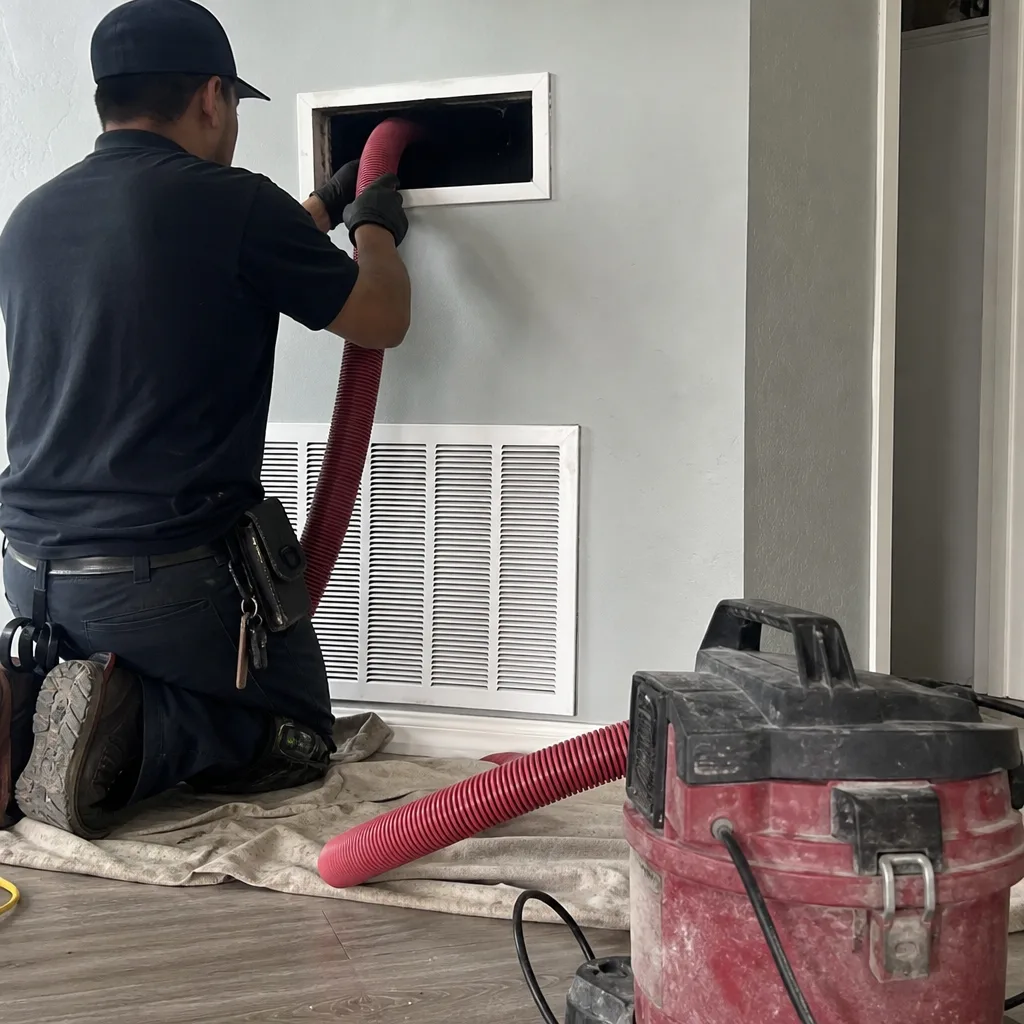
- Blowing out registers with a shop vac or leaf blower from inside the house: this pushes debris deeper into the duct system or aerosolizes it into the living space. Air duct cleaning requires negative-pressure equipment that pulls debris out of the house, not pushes it around.
- Assuming one musty smell episode means a major mold problem: Texas humidity causes condensation on coils, and a quick-clearing musty smell often points to a coil or plenum issue rather than a catastrophic duct condition. Get the system inspected before assuming the worst.
- Skipping duct inspection after a renovation because the house “looks clean”: renovation debris settles inside ducts where no amount of surface cleaning can reach it. If the house had drywall work, the ducts probably have drywall dust.
- Accepting a quote without a written price per system before work starts: some operators quote low and bill high after the work is done. A reputable Fort Worth duct cleaning company provides a written price before the crew starts, with no surprises on the invoice.
When to Call a Professional
A professional duct inspection is the right move when any single warning sign has persisted for more than a couple of weeks, or when two or more signs appear together, and you can explore more guides & resources on our blog to learn what to expect. Persistent weak airflow in one room, a lingering musty smell, filters loading in half their rated lifespan, dust returning within days of cleaning, and pets or small children showing indoor respiratory symptoms are all legitimate reasons to get eyes on the duct system. Mortons Air Duct Fort Worth offers free estimates in Fort Worth, and every visit includes a written price before any work starts, with technicians who arrive in uniform and protect floors from the moment they walk in. Call (682) 432-0424 to schedule an estimate.
Frequently Asked Questions
The most reliable early signals are room-to-room airflow differences, rapid filter loading, a musty smell that lingers while the system runs, and pets or small children showing indoor respiratory symptoms. Visible dust at registers is a late-stage sign. If you notice several of these together, the duct system deserves an inspection.
A musty smell that clears within minutes of system startup usually points to the evaporator coil or supply plenum, while a smell that lingers while the system runs usually points to accumulated debris deeper in the ductwork. Both conditions are inspectable, and both are common in Fort Worth’s humid spring and fall shoulder seasons.
Most Fort Worth homes with pets and kids benefit from a professional cleaning every three to five years. Homes with multiple indoor pets, recent renovations, or family members with indoor allergies may benefit from a shorter interval. If the house has never had its ducts cleaned and is more than fifteen years old, a first cleaning is usually overdue.
Dirty ducts can deliver more airborne particulate to the rooms where a small child sleeps and plays, and children breathe more air per pound of body weight than adults. If a child’s symptoms are consistently worse at home and better elsewhere, the air delivery system is worth inspecting. Medical questions should always go to a pediatrician first.
Low quotes often cover a partial cleaning, a quick vacuum of accessible registers only, or come with add-ons that raise the final invoice. A full-system cleaning uses professional negative-pressure equipment, like the Rotobrush or Nikro systems we use, and takes real time to do correctly. Ask for a written price per system before any work starts, and confirm that the written price is the final price.
A reputable company provides visual proof. We photograph the inside of the ducts before and after, and every completed job includes a photo of the clean-up before the crew leaves. If a company cannot show you what changed, that is a reason to ask harder questions. Call (682) 432-0424 to talk through what a full cleaning includes.
The Bottom Line
Air duct warning signs in a Fort Worth house appear in a reliable order: airflow differences first, then filter loading, then pet and child signals, then smells, then visible dust. The homeowners who catch the early signs save money, breathe cleaner air, and avoid the uncomfortable summer of a system struggling against its own ducts. Mortons Air Duct Fort Worth has served Fort Worth families since 2005, with professional equipment, written pricing before any work starts, and a 365-Day Done Right Promise on every job. If you have noticed any of the signs in this guide, call (682) 432-0424 for a free estimate and a written plan.
Written by Paul Adeyemi, Owner at Mortons Air Duct Fort Worth, serving Fort Worth since 2005.
See the difference
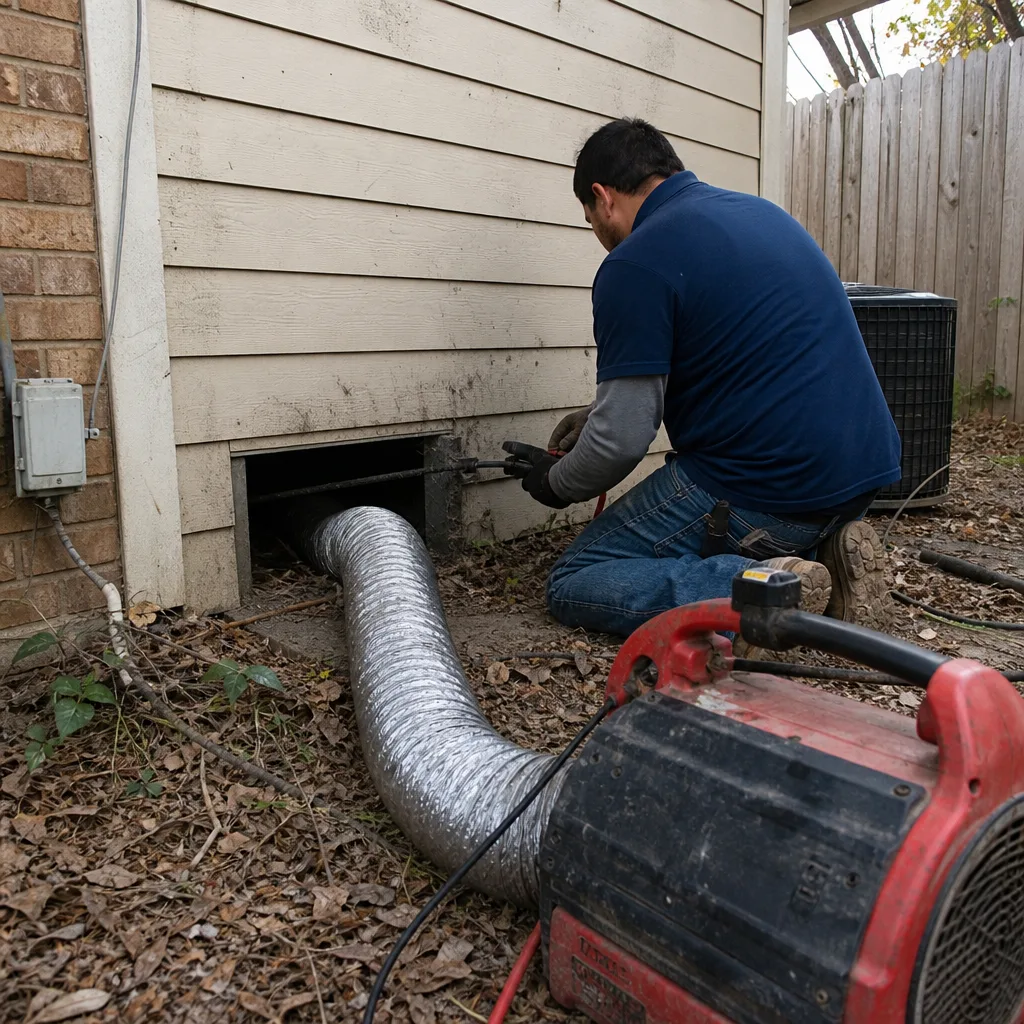 Before
 After
After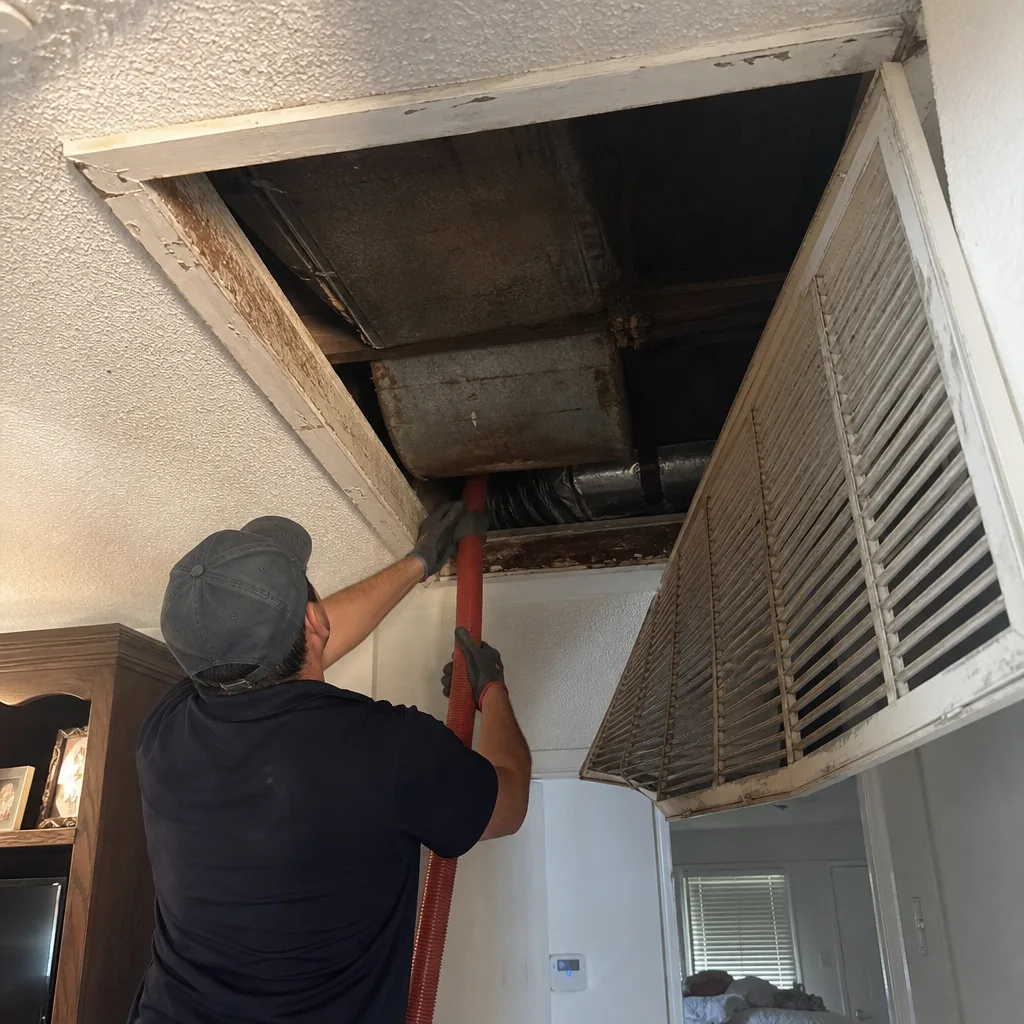 Before
 After
After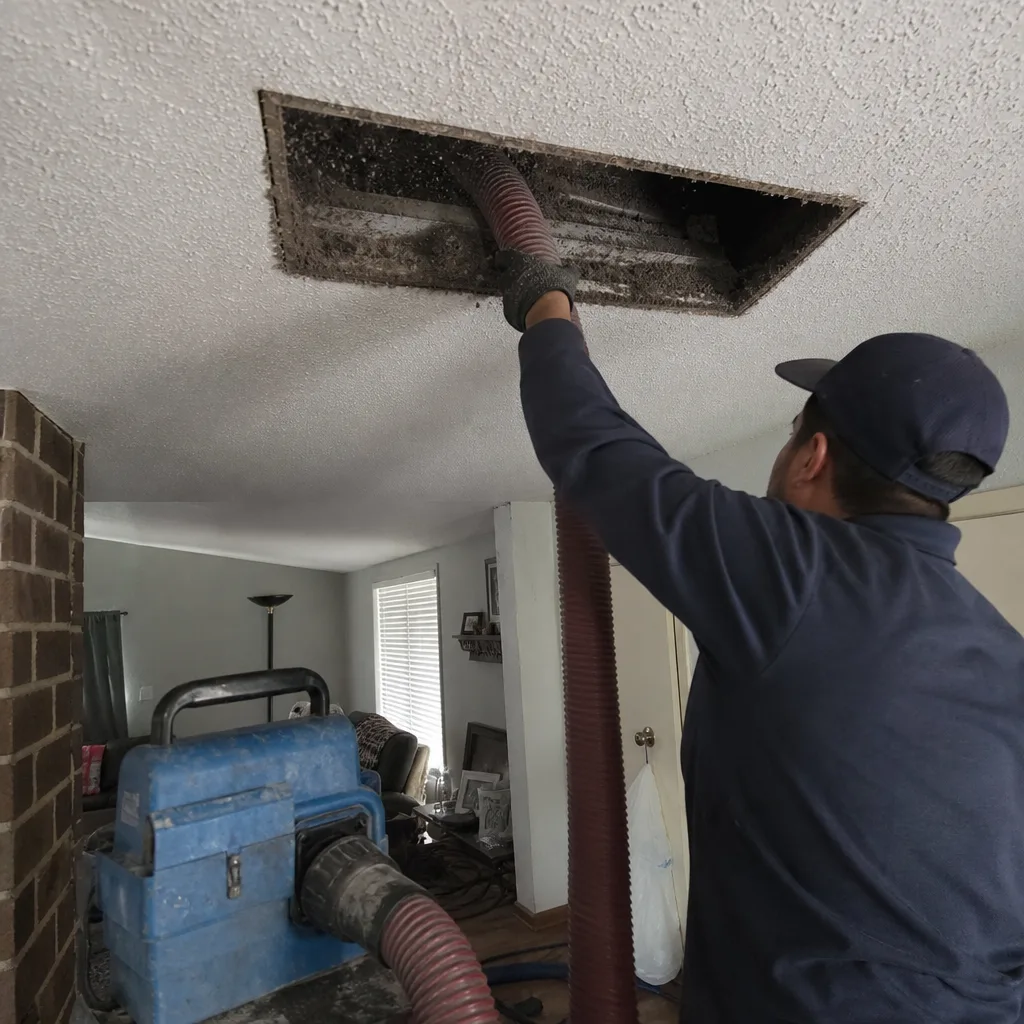 Before
 After
After